Poets Directory (شعرائے کرام)
Explore profiles, portraits, life biographies, and complete poetry of classical and modern Urdu luminaries.

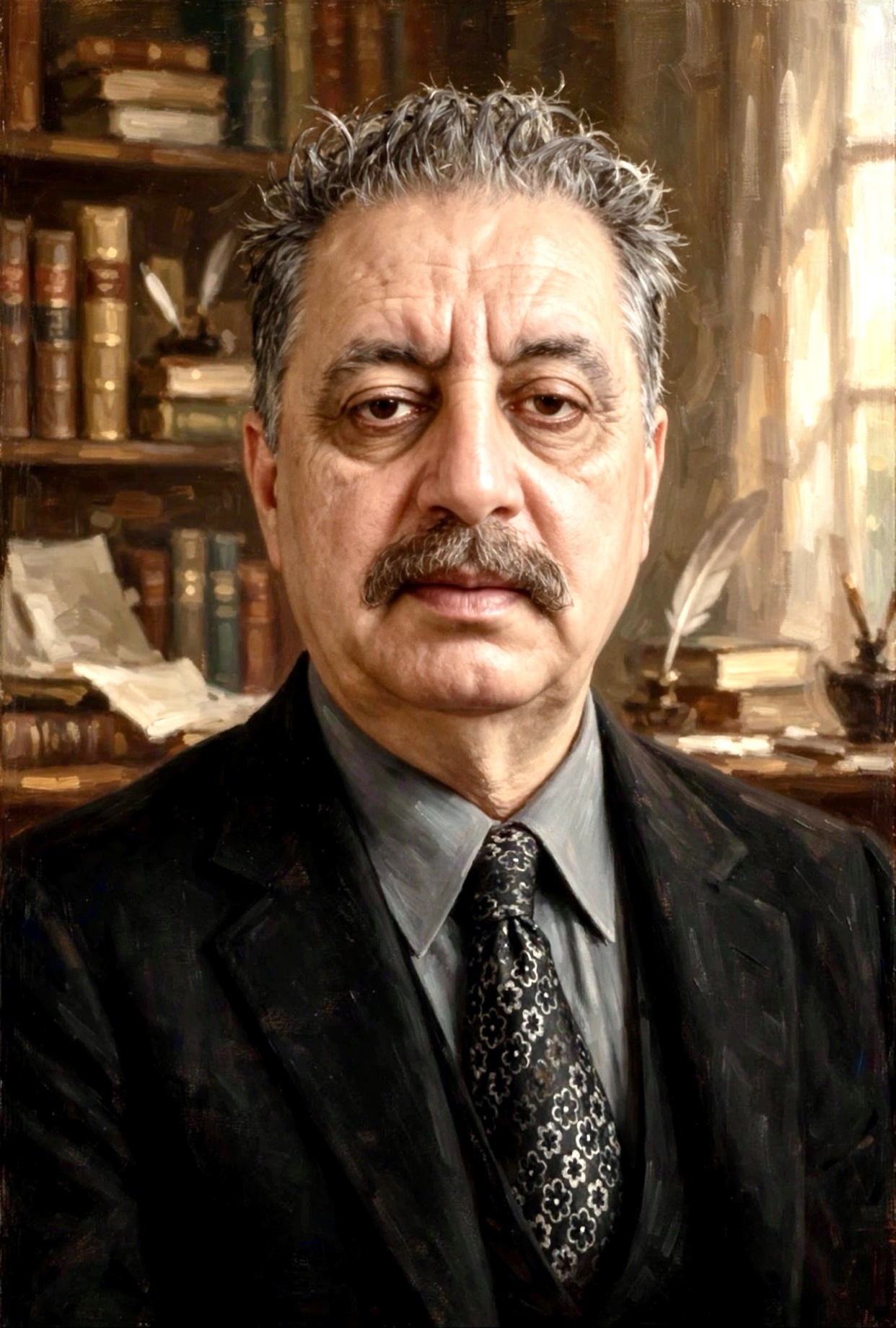
Daya Shankar Naseem
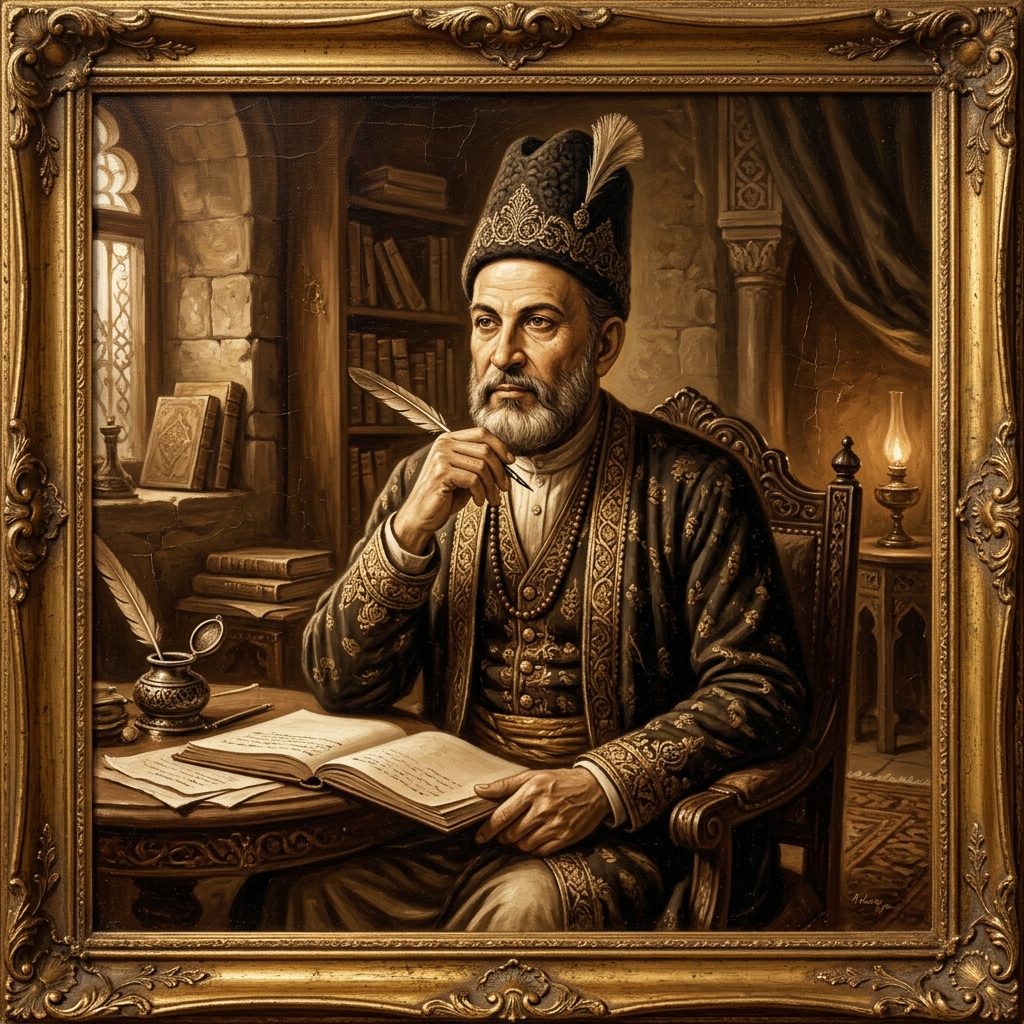
Pandit Daya Shankar Naseem (1811–1845) — born Daya Shankar Kaul in Lucknow — was a 19th-century Awadh poet and disciple of Khwaja Haider Ali Atash. Born into a respected Kashmiri Pandit family, he served as a clerk in the Nawabi army's finance department under Nawabs Ghazi-ud-Din Haider and Naseer-ud-Din Haider, at the height of Lucknow's comforts and luxuries. He began, like Atash's other pupils, with the ghazal — but the ghazal could not contain his imagination. His enduring fame rests on the romantic masnavi *Gulzar-e-Naseem* (published 1844): the tale of Prince Taj-ul-Muluk and the fairy Gul Bakawali, versified from Persian prose — hailed as the masnavi that represents the Lucknow school of poetry, and prized above all for its language, the very idiom of dabistan-e-Lucknow. He died young, at about thirty-four; his authorship of the masnavi was once questioned and was defended by Brij Narayan Chakbast.
Ehsan Danish
Ehsan Danish (born Ehsan-ul-Haq; died 22 March 1982, Lahore) was a self-taught Urdu poet, prose writer, linguist and lexicographer known as Shair-e-Mazdoor, the Poet of the Workmen. Born in Kandhla, Muzaffarnagar district, Uttar Pradesh, into a poor family, he could not continue formal schooling and taught himself Arabic and Persian. Migrating to Lahore, he worked for years as a labourer — mason, painter's assistant, watchman and more — before establishing himself as a writer and founding the publishing house Maktaba-e-Danish. He wrote more than 80 books of poetry, prose, linguistics and lexicography, including the classic autobiography Jahan-e-Danish, and received the Sitara-e-Imtiaz in 1978. His early verse was romantic; his mature poetry spoke for labourers and common people in plain, direct Urdu.

Fahmida Riaz
Fahmida Riaz (1946–2018), born 28 July 1946 at Meerut in a literary family, was Pakistan's poet of resistance — the woman's voice that refused, for fifty years, to be either decorative or silent. Her father, educationist Riaz-ud-Din Ahmed, was transferred to Sindh, so she grew up in Hyderabad, lost her father at four, and was raised by her mother; her first poem appeared in Ahmad Nadeem Qasmi's Funoon when she was fifteen. Her first collection, Patthar ki Zaban (1967), already spoke a young woman's desire with a directness Urdu had seldom heard; her second, Badan Dareeda (1973) — "the torn-bodied" — was denounced by conservatives as erotic and became a milestone of modern Urdu poetry for exactly that honesty. Under Zia-ul-Haq she was charged with sedition and spent seven years in exile in India, where she was poet-in-residence at Jamia Millia Islamia, Delhi, and learnt Hindi. On return she led the National Book Foundation, later headed the Urdu Dictionary Board in Karachi, and kept writing: Godaavari, Khatt-e Marmuz, novels, stories, and the first rhymed Urdu translation of Rumi's Masnavi, Khana e Aab O Gil, alongside translations of Shah Abdul Latif Bhitai and Shaikh Ayaz from Sindhi. Her late poem "Tum bilkul hum jaisey nikley" (2014) — addressed across the border — made her, once more, the conscience of two countries at once. She received the Pride of Performance (2010) and the Sitara-e-Imtiaz, and died in Lahore on 21 November 2018.
Faqir Muhammad Khan Goya
Faqir Muhammad Khan Goya (c. 1784 – c. 1850) was the soldier-poet Nawab of Malihabad, in Awadh. Born into an Afridi Pashtun family whose roots lay in the Khyber region, he mastered Urdu and Persian and followed the school of Imam Bakhsh Nasikh. He served as a soldier and commander under Yashwant Rao Holkar at Indore and under Ghaziuddin Haider, Nawab of Awadh, rising to Commander-in-Chief of the Awadh army, and founded the Tharri-Fatehnagar estate at Malihabad. His Diwan-e-Goya holds ghazals, qasidas, naats, nohas and salaams, and his Bustan-e-Hikmat (Nawal Kishore, 1887) renders the Persian Anwar-e-Suhaili into Urdu. He is remembered in Malihabad's literary line as the great-grandfather of Josh Malihabadi — the elder voice of the town whose poetry Josh would later carry to the world.
Fayyaz Hashmi
Fayyaz Hashmi (1920–2011) was a Pakistani poet and film lyricist, born in Calcutta in 1920 to the poet and stage-drama writer Syed Muhammad Hussain Hashmi 'Dilgeer'. He began writing songs as a teenager — his early hit "Tasveer teri dil mera behla na sakegi", sung by Talat Mahmood, made the singer famous — and served as resident lyricist of the Gramophone Company of India from 1943 to 1948. After Partition he moved to Lahore, where he helped organise Pakistan's music scene and promoted artists including Farida Khanum; his first Pakistani film songs were for Kunwari Bewa (1956). He is credited with 482 songs for 122 Pakistani films, and his lifetime song count is quoted at over 2,000. Alongside the film work he wrote ghazals, collected in Satah-e-Aaina (1982), winning the Graduate Award three times and the Nigar Award for best song in 1978. He died in Karachi on 29 November 2011.
Fidvi Lahori
Fidvi Lahori (1729–1780) was born Mukund Lal into a Hindu Bania family of Lahore. He converted to Islam and took the name Mirza Fidai Beg, with "Fidvi" — one who sacrifices himself, a devotee — as his takhallus. After several years in Isfahan, he came to Delhi and became a pupil of Sabir Ali Sabir. A qasida he wrote for Ahmad Shah won him a horse, a sword and a thousand rupees. He served at the courts of Nawab Muhammad Yar Khan and later Nawab Zabita Khan. His poetic rivalry with Mirza Sauda was famous: Sauda lampooned him in satires, one of them in Punjabi, that survive in Sauda's kulliyat. Little of Fidvi's own Diwan has survived, but one of his couplets — on the lover's funeral going out with pomp — has passed into proverb. He died in 1780, in Lahore according to most accounts, though Mashafi says Moradabad.
Firaq Gorakhpuri
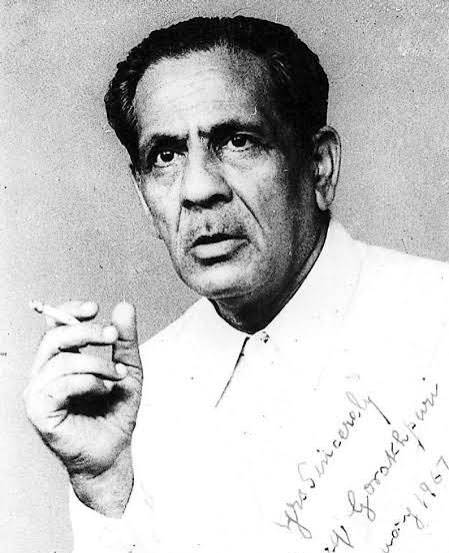
First Urdu Jnanpith laureate — the poet who gave the modern ghazal an Indian heart.
Ghawwasi
Ghawwasi was a seventeenth-century Dakhni poet of the Deccan, also known as Gawwasi Bedri and in literary histories as Mulla Ghawwasi, court poet of Golconda under Sultan Abdullah Qutb Shah. His fame rests on the romance masnavi Saif al-Muluk wa Badi' al-Jamal — the tale of Prince Saif al-Muluk and Badi' al-Jamal — begun under Muhammad Quli Qutb Shah and completed in 1035 AH (1625–26), in over two thousand verses; literary histories also credit him with a Tutinama. As a court poet he was trusted enough to be sent as an envoy to Bijapur in 1045 AH, when the Adil Shahi court sent its own envoy to Golconda. His surviving ghazals, in plain Dakhni, turn on the saqi's cup, the beloved who is the heart's comfort, and a proud final claim: that no one has grasped Ghawwasi's manner. The takhallus itself — the diver — suits a poet of romance, descending for pearls.
Ghulam Ali Azad Bilgrami
Mir Ghulam Ali Azad Bilgrami (1704–1786) was born at Bilgram, in Awadh, into a family of scholars, and became one of the great learned men of eighteenth-century India — a poet in Arabic and Persian, a biographer of poets, and a historian of his own town and age. Taught first by his grandfather, the scholar-poet Mir Abdul Jalil Bilgrami, he travelled widely in his youth — Delhi, Lahore, Multan, Sind — and in 1737 set out for the Hijaz, where he spent two years studying the traditions of the Prophet in Mecca and Medina. On his return he settled at Aurangabad in the Deccan, where he lived the rest of his long life, its first seven years in seclusion at a saint's tomb, refusing court service and reserving his praise-poetry for the Prophet and the saints — the devotion that earned him the title Hassan of Hind, the Hassan of India. His Arabic diwan alone contains more than three thousand couplets, and beside it stand a Persian diwan and long masnavis; but his lasting gift to literature is his biographical writing. In three great Persian dictionaries of poets — Yad-e-Bayza, with lives of 532 poets; Sarv-e-Azad, with 143 poets of India, among them eight early Urdu poets; and Khizana-e-Amira, written in 1762–63, with 135 poets — he preserved the lives and verses of men he often knew himself, and in Ma'asir al-Kiram he wrote the history of Bilgram, its saints and learned men. His Subhat al-Marjan, the Coral Rosary, written in Arabic in 1763–64, wove together Indian and Arabic learning and praised India as the first home of Adam. He died at Aurangabad in 1786, aged eighty-two, and was buried at Khuldabad, near the shrine of Amir Hasan Dihlavi.
Ghulam Hamdani Mushafi
The witty chronicler-poet of old Delhi and Lucknow, whose maqtas still sting and heal.