Poets Directory (شعرائے کرام)
Explore profiles, portraits, life biographies, and complete poetry of classical and modern Urdu luminaries.
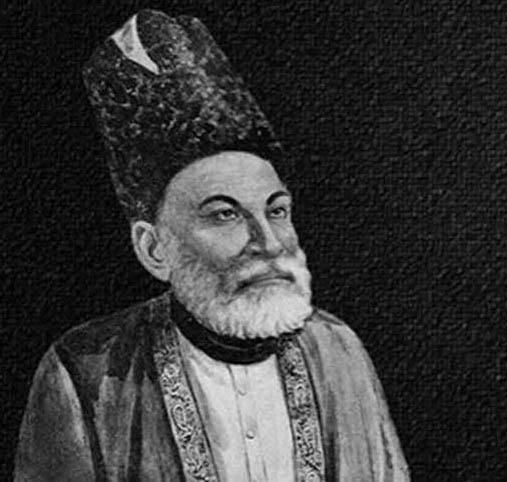
Mirza Ghalib
Mirza Asadullah Khan Ghalib is the most widely celebrated and critically acclaimed poet of the Urdu language. His intellectual depth, witty skepticism, existential philosophical inquiry, and mastery of metaphor transformed Urdu poetry forever.
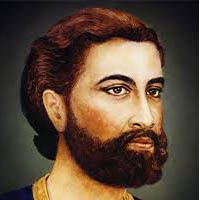
Mir Taqi Mir
Revered as Khuda-e-Sukhan (The God of Poetic Expression), Mir Taqi Mir was the pioneer of the Urdu ghazal whose pathos, melancholic elegance, and sheer linguistic purity set the standard that Ghalib and later poets aspired to emulate.
Mah Laqa Bai
Mah Laqa Bai "Chanda" (7 April 1768 – August 1824), born Chanda Bibi in Aurangabad, was a tawaif-turned-court-poet of Hyderabad — the first woman Urdu poet with a published diwan. Daughter of the courtesan Raj Kunwar (who had migrated from Rajputana) and Bahadur Khan, a Mughal mansabdar, she was raised by her childless aunt Mehtaab Ma, the favoured courtesan of Nawab Rukn-ud-Daula, who gave her an elite education. The second Nizam, Mir Nizam Ali Khan (Asaf Jah II), conferred the title "Mah Laqa Bai" (Visage of the Moon) and appointed her to the *omarah*, the highest nobility; she advised on state policy, accompanied him to three battles in male attire, and was celebrated as a thumri singer and Deccani Kathak dancer — the first woman of the region to recite in a mushaira. Her diwan, *Gulzar-e-Mahlaqa* (39 ghazals of 5 couplets each), was printed in 1824 after her death — the first published diwan by any woman Urdu poet; her own 1798 manuscript *Diwan-e-Chanda* (125 ghazals, gifted to Captain Malcolm in 1799) survives in the British Museum. She died in Hyderabad in 1824 and lies in the mausoleum she built at Moula-Ali, restored in 2010. She is also held, by some scholars, to be the inspiration behind Mirza Hadi Ruswa's *Umrao Jaan Ada* (1899).
Maharaja Sir Kishan Prasad Shad (1864 – 13 May 1940) of Hyderabad was a poet first and a prime minister second — or, as Hyderabad liked to say, a poet who happened to rule. A childhood friend of Nizam Mahbub Ali Khan and heir to a family that traced itself to Raja Todar Mal, he became Peshkar of Hyderabad State in 1892 and its Dewan (Prime Minister) in 1901, taking the title Yamin-us-Saltanat, "right hand of the realm", and the rank of Maharaja. In his first tenure he raised the state's revenues, organised relief after the great Musi Flood of 1908, and left the treasury fuller than he found it; after resigning in 1912 he was called back by Nizam Osman Ali Khan in November 1926 and served until March 1937, passing the Mulki regulations that reserved posts for Hyderabad's own people. He was knighted KCIE in 1903 and GCIE in 1910. Through all of it he remained a disciple of Dagh Dehlvi, writing Urdu and Persian poetry under the takhallus "Shad" — happy — in a Sufi key: ghazal, naat and marsiya, collected in Bagh-e-Shad (1890) and later volumes, and shared in his own magazine Mahbub al-Kalam. His house was a morning court of poets, painters and musicians from across India, Persia and Arabia, and his life — seven wives, Hindu and Muslim, each following her own faith — was itself an argument for the Ganga-Jamuni tehzeeb he championed. At his death in Hyderabad on 13 May 1940, the Nizam said society had witnessed "the departure of the last vestige of the Mughal Empire".
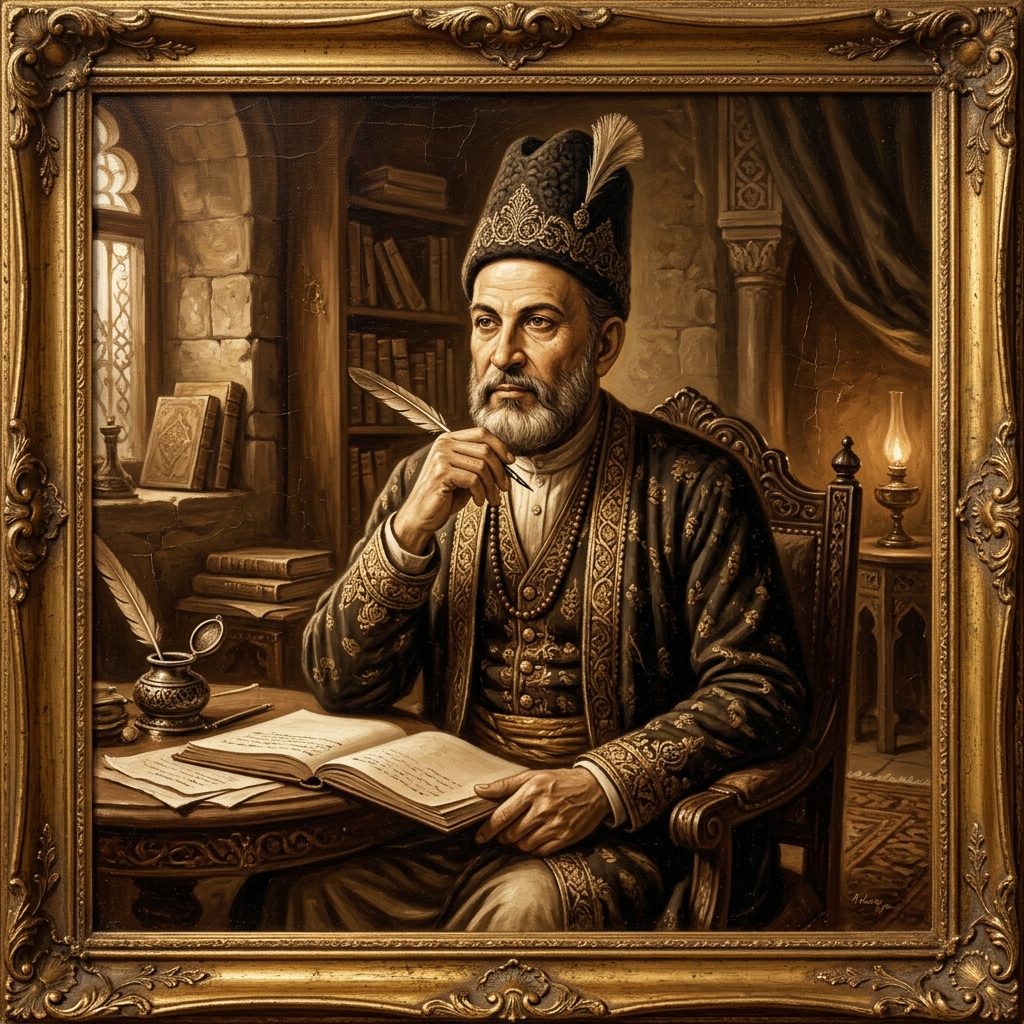
Majeed Amjad
Majeed Amjad (1914–1974) was a Pakistani modern Urdu poet, counted among the founding fathers of modern Urdu poetry and described as a philosophical poet of depth and sensitivity. Born Abdul Majid on 29 June 1914 in Jhang, Punjab, he was taught Arabic and Persian by his maternal grandfather, took his bachelor's degree from Islamia College Lahore in 1934, and edited the weekly Arooj in Jhang. He then served in the Food Department, spending the last twenty-eight years of his life in Sahiwal, where he retired as Assistant Food Controller in 1972 and died on 11 May 1974; he was buried in Jhang. His first collection, Shab-e-Rafta (1958), with a preface in verse, was the only book published in his lifetime; Shab-e-Rafta Ke Baad followed posthumously in 1976, and his complete works, Kuliyat-e-Majeed Amjad, were edited by Khawaja Muhammad Zakariya in 1989. Away from the great literary centres, he built a poetry of striking images and unexpected connections — philosophical, introspective, and deeply personal, in ghazal, nazm and free verse.
Majrooh Sultanpuri
Majrooh Sultanpuri (1919–2000), born Asrar ul Hassan Khan in Sultanpur, U.P., was a Progressive Urdu poet and one of Hindi cinema's most celebrated lyricists. A trained Unani physician (Hakim) and disciple of Jigar Moradabadi, he left medicine for poetry, joined films in 1946 with Shahjahan ("Jab dil hi toot gaya"), and served two years in prison in 1949 for his leftist verse. Across six decades he wrote more than two thousand film lyrics — from Andaz and Dosti ("Chahunga main tujhe sanjh savere", Filmfare Best Lyricist 1965) to Qayamat Se Qayamat Tak and Jo Jeeta Wohi Sikandar ("Pehla nasha") — while his fifty-odd ghazals and two notable nazms carried the Progressive fire; none is more famous than "main akela hi chala tha jaanib-e-manzil magar", which Wikipedia's own article calls one of the best-known verses of Urdu poetry. He became the first lyricist to receive the Dadasaheb Phalke Award (1993), and also received the Ghalib Prize and the Iqbal Samman. He died in Mumbai on 24 May 2000.
Makhdoom Mohiuddin
Makhdoom Mohiuddin (1908–1969), born Abu Sayed Muhammad Makhdoom Mohiuddin in Andole village, Medak district, Hyderabad State, was the revolutionary Urdu poet known as "Shayar-e-Inquilab" (Poet of the Revolution). He founded the Progressive Writers Union in Hyderabad, taught Urdu literature at City College (1934), joined the Communist Party of India, and stood at the forefront of the 1946–47 Telangana Rebellion against the Nizam; he later became a founder of the CPI in Andhra Pradesh, a member of the Andhra Pradesh Legislative Council (1956–1969) and its opposition leader. His collections *Surkh Savera* (1944) and *Gul-e-Tar* (1961) were gathered with the rest of his verse in *Bisat-e-Raqs*, which won the 1969 Sahitya Akademi Award for Urdu. His ghazals — "Aap Ki Yaad Aati Rahi Raat Bhar," "Phir Chhidi Raat, Baat Phoolon Ki," "Ek Chameli Ke Mandve Taley" — became immortal through Hindi films. He died in Hyderabad on 25 August 1969.
Meer Syed Ali Ghamgeen Dehlvi
Meer Syed Ali Ghamgeen Dehlvi was a Sufi poet of Delhi for whom Mirza Ghalib held great devotion. His dates must be read with care: 1753–1851 is sometimes given, a span of ninety-eight years, but his birth year is disputed and is recorded here as Unknown, with 1851 carried as the death year. What is solid is the work: 10 ghazals and 9 sher from him survive, with books including Makhzan-ul-Asrar (his diwan of ghazals), Makashafat-ul-Asrar, and a Diwan-e-Rubaiyat, and later studies of his life and poetry, including a volume on the Persian correspondence between Ghalib and Ghamgeen. His verse is Sufi to the core: the journey within the self, wine as spiritual symbol, death, and the beloved's voice heard at the final hour.
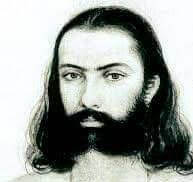
Meeraji
The bohemian who freed the Urdu nazm — symbolism, free verse, and Hindu myth in a life lived by the tavern's edge. Meeraji (1912–1949), born Muhammad Sanaullah Dar into a Kashmiri family of Gujranwala, was one of the founding fathers of the modern Urdu nazm — the pioneer who carried symbolism and free verse into Urdu poetry. Raised in Lahore, he first wrote under the takhallus "Sasri"; a one-sided love for a Bengali girl, Meera Sen, gave him the pen name by which he is remembered. Though brought up in comfort — his father Munshi Mohammad Mahtabuddin was a railway engineer — he left home and family to live as a bohemian wanderer, staying with friends and making a living by selling his songs. He served as poetry editor of the Lahore magazine *Adabi Duniya* (1938), worked for All India Radio in Delhi, wrote literary columns for the monthly *Saqi*, and briefly helped edit *Khayal* in Bombay, settling in Bombay after Partition. Drawn from his teens to Hindu mythology, he wove Hindi vocabulary into his poetry, prose, and letters; he acknowledged his debts to the Sanskrit poet Amaru and the French Baudelaire, and translated Damodar Gupta and Omar Khayyam. His collections include *Meeraji ke Geet*, *Meeraji ki Nazmein*, *Geet hi Geet*, *Paband Nazmein*, and *Teen Rang*; the *Kulliyat-e-Meeraji* appeared in 1988. He died in Bombay in November 1949, aged only thirty-seven.
Mir Hasan
Mir Hasan (1727–1786), born Mir Ghulam Hasan in Delhi's Syed Wada, was the foremost masnavi poet of Urdu — and the grandfather of Mir Babar Ali Anis, the future king of the marsiya. Trained first by Khwaja Mir Dard, he came of age in a Delhi that was breaking apart: his family moved to Faizabad in Awadh as the invasions pressed, and he later settled at Lucknow, where the displaced Delhi school rebuilt itself under the Nawabs. There he composed, in 1784, the work that made him immortal: Sehr-ul-Bayan, the masnavi romance of Benazir and Badr-e-Munir — a love story told with such sweetness of language that it became the model Urdu narrative poem. Around it stand his other masnavis — Gulzar-e-Iram, the verse-account of the Delhi to Awadh migration; Ramuz-ul-Arifin, a Sufi masnavi; Khwan-e-Nemat, on the dishes of Asaf-ud-Daula's dastarkhwan — plus a ghazal divan and a Persian tazkira of Urdu poets, Tazkira-i-Shuara-i-Urdu. Four of his sons were poets; through Anis, his grandson, his bloodline carried the masnavi's music into the marsiya's age. He died at Lucknow in 1786.