Poets Directory (شعرائے کرام)
Explore profiles, portraits, life biographies, and complete poetry of classical and modern Urdu luminaries.
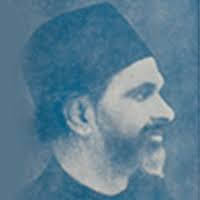
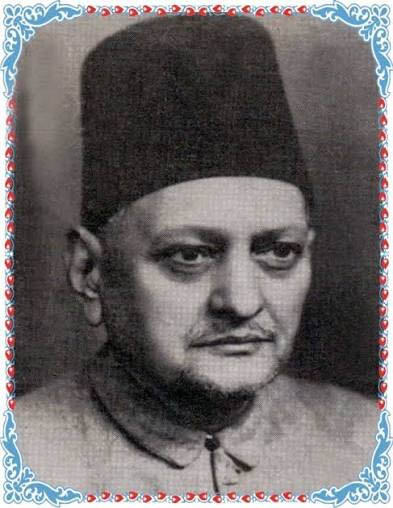
Sufi Ghulam Mustafa Tabassum
Sufi Ghulam Mustafa Tabassum (1899–1978) was a Pakistani poet, scholar and translator, universally known by his pen name Tabassum. Born in Amritsar on 4 August 1899 to parents of Kashmiri ancestry, he earned a master's degree in Persian from Forman Christian College, Lahore, and spent his whole career at Government College Lahore, rising to head the Department of Persian Studies. He wrote in Urdu, Persian and Punjabi, created the beloved children's character Tot Batot, and translated many poetical works from Persian into Punjabi and Urdu, including Shakespeare's *A Midsummer Night's Dream* into Punjabi. He received Iran's Tamgha-e-Nishan-e-Sipas in 1966 and Pakistan's Sitara-i-Imtiaz, and died in Lahore on 7 February 1978.
Suroor Jahanabadi
The founding voice of the modern Urdu nazm — a patriot's pen, a mourner's heart, and sher that turned dust into philosophy. Suroor Jahanabadi (December 1873 – 3 December 1910), born Munshi Durga Sahai in Jahanabad, a town of the Pilibhit district (then the North-Western Provinces), was one of the chief architects of the modern Urdu nazm. Studious from childhood, he learned Arabic and Persian and taught himself elementary English; he signed his early verse "Wahshat" before settling on the takhallus "Suroor". He worked in the editorial department of *Zamana*, the Kanpur literary magazine, and his ghazals and nazms found their way into prestigious journals — *Adeeb*, *Makhzan*, *Ismat*, *Urdu-e-Mualla*. While he wrote ghazals, he chose the nazm as his favourite form, and critics credit him with authenticating the new Urdu nazm through his thematic concern and stylistic innovations. His poetry uses Hindi and indigenous words freely and draws imagery from Hindu mythology; much of it is written in six-line musaddas stanzas. He wrote patriotic poems — *Khak-e-Watan*, *Madar-e-Hind*, *Hasrat-e-Watan* — and historical ones — *Padmani*, *Sitaji-ki-Giria-o-Zari*, *Nur Jahan ka Mazar*. The deaths of his wife and his only son broke him; he drank heavily and died at thirty-seven. His collections — *Khumkhana-e-Suroor* and *Jam-e-Suroor* (1911), *Khumkada-e-Suroor* (1931, posthumous) — keep his work alive.
Syed Muhammad Jafari
Syed Muhammad Jafari (1905–1976) was a humorist and satirist of Lahore, a poet who made laughter do the work of reform. The son of Mohammad Ali, principal of Government College, Lahore, he passed his Munshi Fazil examination at fourteen and his matriculation at seventeen, took a B.Sc. (Honours) in Chemistry from Islamia College, Lahore, and then turned to the arts for an M.A. and M.O.L. in Persian from Oriental College, Lahore. The great humorist Pitras Bukhari was one of his teachers, and he also trained in painting and fine art at the Mayo College of Arts. He served first in the Department of Education and then in the Department of Publicity and Information, retiring in 1966. He wrote nearly nine hundred nazms on political and social subjects, and wove the lines of Ghalib and Iqbal into his own verse. His satire was sharp and unsparing — corruption in public and private life, elections, politics, the promises of the great powers — yet free of rancour and personal malice: the joke was always aimed at the fault, never at the man. His collections include Teer-e-Neem Kash, and his best-known book of humorous verse, Shokhi-e-Tahreer, was published after his death by his sons. He died in 1976. No birthplace is recorded for him; Lahore was the city of his education, his service and his verse.
Syed Zameer Jafri
Syed Zameer Jafri (1916–1999) was a Pakistani poet, humorist, columnist and retired army officer, the best-known name in Urdu humorous poetry. Born on 1 January 1916 at Chak Abdul Khaliq, near Dina in district Jhelum, he began his working life as a journalist, then served in the Pakistan Army Education Corps — in the Far East during the Second World War and in the wars of 1947–48 and 1965 — retiring as a Major in 1965. He then became the first Director of Public Relations of the Capital Development Authority in Islamabad. Across some 78 books of poetry and prose in Urdu, Punjabi and English, above all the humorous collection Ma Fi-Zamir, he made laughter a vehicle for patriotism, common sense and love of mankind. He received the Tamgha-e-Quaid-e-Azam in 1967 and the Pride of Performance in 1984, and the Presidential Iqbal Award for his Urdu poetry in 2001. He died in New York on 12 May 1999.
Wahid Akhtar
Syed Waheed Akhtar was an Indian Urdu poet, critic, orator and philosopher, and one of the leading Muslim scholars of the twentieth century. Born in Aurangabad to a family that had migrated from Nasirabad–Jais in Raebareli district, he spent his childhood in Aurangabad, studied at Osmania University, Hyderabad, where he completed his Ph.D., and was then appointed lecturer at Aligarh Muslim University, where he settled for the rest of his life and retired in 1995 as Professor of Philosophy. In his early years he used the takhallus Barq. His poetry collections include Shab Ka Razmiyah, Paththaron Ka Mughanni and Zanjeer Ka Naghma, and his Karbala Ta Karbala (1991) carried the marsia into a new age; he also wrote a major research study of Khwaja Mir Dard. Shamsur Rahman Faruqi described him as a modernist whom many also counted as a progressive, who argued that modernism was really an extension of progressivism. He died on 13 December 1996.
Wahshat Raza Ali Kalkatvi
Wahshat Raza Ali Kalkatvi (1881–1956) was a prominent later–classical Urdu poet from Bengal. Born on 18 November 1881 in Hooghly to Maulvi Shamshad Ali, who had moved there from Delhi, he was schooled at Madrasa Aaliya in Calcutta and became a poetry apprentice of Abul Qasim Mohammad Shams in 1898. After higher education he served as Chief Maulvi in the Persian department of the Imperial Record Department, Calcutta, and when Islamia College started in 1926 he became a professor of Urdu there. In 1931 the British Government honoured him with the title of Khan Bahadur. His collections include Diwan-e-Wahshat and Taraana-e-Vahshat (1950), and the progressive poet Parvez Shahdi was his disciple. After independence he migrated to Pakistan, where he died in 1956.
Wazir Agha
Wazir Agha (1922–2010) was a Pakistani Urdu poet, critic and essayist, and one of modern Urdu's most prominent critics. Born in Wazir Kot in the Sargodha district, he learned Persian from his father and Punjabi from his mother, graduated from Government College Jhang, took a master's in economics from Government College Lahore, and earned a PhD from the University of Punjab in 1956 for research on humour and satire in Urdu literature. From 1960 to 1963 he co-edited Adbi Duniya, and from 1965 he edited the monthly Auraq for many decades. He wrote more than forty prose books, including the landmark critical study Urdu Shairi ka Mizaj, and experimented in poetry with ballads, sonnets and free verse, his poems often carrying an element of story. He received the Sitara-e-Imtiaz and was a Life Fellow of the Pakistan Academy of Letters.
Zafar Ali Khan
The journalist-poet of the freedom movement — *Zamindar*'s editor, whose nazms were acts of resistance. Maulana Zafar Ali Khan (1873–1956), born in Kot Marath in Sialkot district, was the journalist-poet of India's freedom movement. Educated at Mission High School Wazirabad and Aligarh's Anglo Mohammedan College (BA), he took over the Daily *Zamindar* of Lahore in 1908 — the paper his father Maulvi Sirajuddin Ahmad had founded in 1903 — and made it northern India's most influential Urdu daily. His poetry was a mode of resistance: nationalist nazms that opposed the British, supported the Khilafat Movement, and rejected Gandhi's non-violence in favour of direct confrontation. The price was five years' rigorous imprisonment under Punjab's Governor Michael O'Dwyer. His diwans — *Baharistan* (1937), *Nigaristan*, *Chamanistan* (1944), *Raharistan* — carry the same fire, alongside essays, a play (*Jang-e-Rus-o-Japan*), and a celebrated Urdu translation of Kipling's *Jungle Book*. His naats, including "Woh Shama Ujala Jis Ne Kiya" sung by Mehdi Hassan, are classics of the genre. A founding member of the Majlis-e-Ahrar-e-Islam and a close associate of Maulana Muhammad Ali Jauhar, he was honoured after Partition with a Pakistan Post commemorative stamp. He died on 27 November 1956.
Zaheer Kashmiri
Zaheer Kashmiri (1919–1994) was a Pakistani Urdu poet, critic and film writer, a leading voice of the Progressive Writers' Movement. Born Peer Dastgeer Zaheer on 21 August 1919 at Amritsar, into a family that had migrated generations earlier from Srinagar, Kashmir, he took an MA in English and began writing poetry at eleven. He became editor of Savera, the Progressive Writers Association's literary magazine — serving on its board alongside Faiz Ahmed Faiz and Ahmad Nadeem Qasmi — and wrote the landmark essay "Meri Zindagi, Mera Fann" (Savera, 1951). Reaching Lahore around Partition, he worked in films — story and direction of Teen Phool (1961), stories for Anjam (1957) and Sheikh Chili (1958), lyrics for seven films — and from 1959 wrote a column in the daily Ehsaan under the pen name Majnu. His poetry collections include Azmat-e-Aadam (1955), Taghazzul, Chiragh-e-Aakhir-e-Shab, Raqs-e-Junoon (1982) and Auraaq-e-Musawwir; his critical work Adab Ke Maaddi Nazariye argued for a materialist reading of literature. His ghazal turns the classical idiom toward the progressive cause: the lover's lamp becomes the last lamp of the night, burning so that after it there is light, not darkness. He died in Lahore on 12 December 1994; the Pride of Performance was conferred on him after his death.
Zeb-un-Nissa (Makhfi)
Zeb-un-Nissa Makhfi (1638–1702) was a Mughal princess and Persian poet, the eldest child of Emperor Aurangzeb and his chief consort Dilras Banu Begum. Born at Daulatabad on 15 February 1638, she memorised the Quran by the age of seven and was educated by Hafiza Mariam in Persian, Arabic, philosophy, astronomy and mathematics. Writing in secret under the pen name Makhfi — "Hidden One" — she kept a Delhi salon of scholars and poets, built a great private library, and composed the ghazals later collected as *Diwan-i-Makhfi*. She never married, and spent about the last twenty years of her life imprisoned by her father at Salimgarh Fort, Delhi, where she died on 26 May 1702.