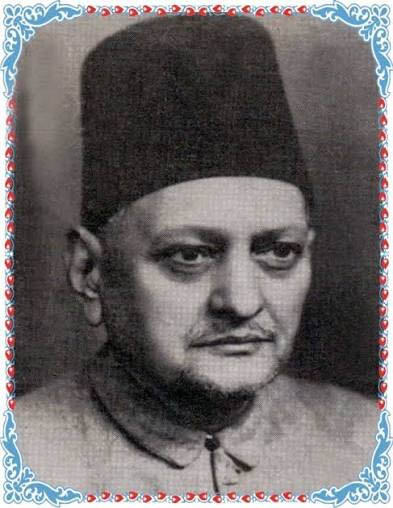
Poets Directory (شعرائے کرام)
Explore profiles, portraits, life biographies, and complete poetry of classical and modern Urdu luminaries.
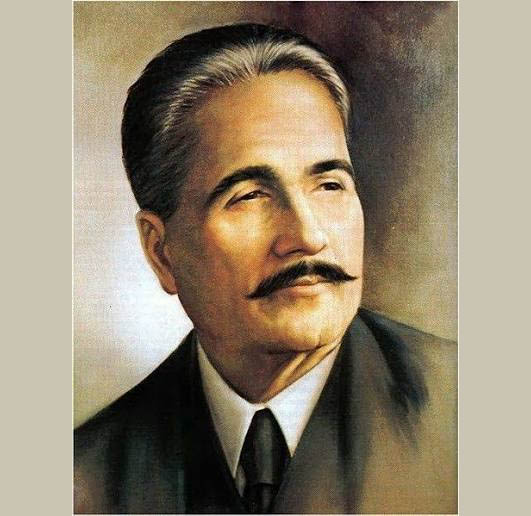
Allama Iqbal
Sir Muhammad Iqbal, known as Muffakir-e-Pakistan and Shair-e-Mashriq (Poet of the East), was a towering philosopher, visionary poet, and politician whose philosophy of Khudi (Selfhood) reawakened the subcontinent.
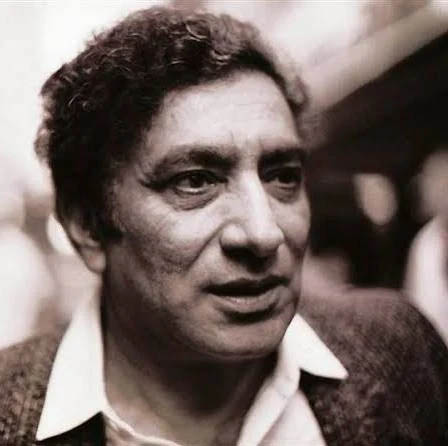
Ahmad Faraz
Ahmad Faraz is widely regarded as one of the greatest modern Urdu poets of romance, elegance, and defiance against political tyranny. His ghazals like "Ranjish Hi Sahi" are sung across the world.
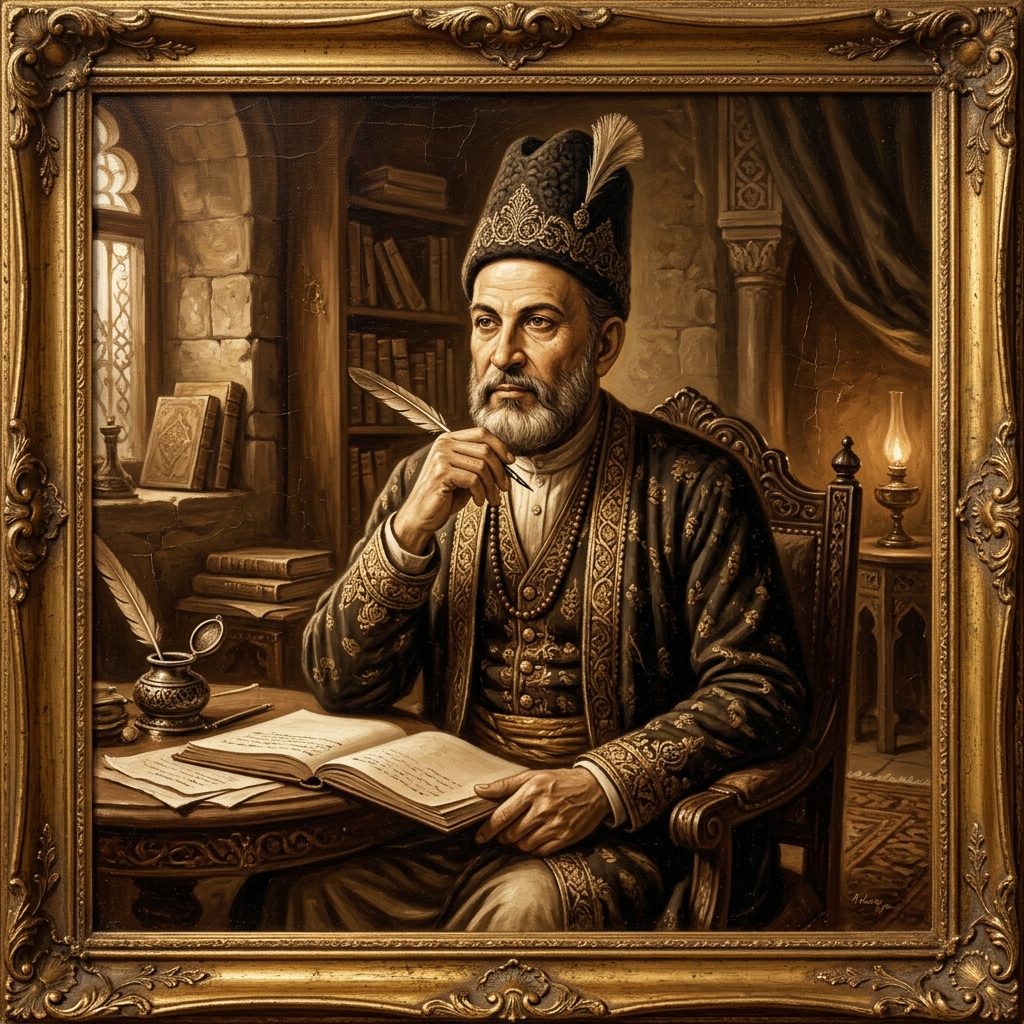
Aagha Akbarabadi
Aagha Akbarabadi (d. 1879) was a classical Urdu poet of Agra — Akbarabad, the old Mughal city whose name he carried as his own. His real name was Meerza Aagha Husain, and no birth year is recorded for him anywhere; he lived in the early-to-mid 1800s, a contemporary of Dagh Dehlvi, while the Mughal Empire was falling apart around him. He never chased courts or patrons: his ghazals speak in the plain language of Agra's streets, and their hero is the rind — the free drinker whose prayer-mat is spread at the tavern door, who answers preachers with wit and takes the beloved's glance as both wound and worship. Twenty-four of his ghazals and thirty-two of his sher survive — the work of a poet famous in his own city and collected only long after his death.
Aasi Ghazipuri
Aasi Ghazipuri (1834–1917) was a Sufi mystic poet of Ghazipur, of the Nasikh school — he is regarded as "the most respectable after Meer Dard to have written this kind of poetry." Born Shah Muhammad Abdul Aleem on 21 December 1834 at Sikandarpur in Ballia district, into a well-educated family tracing its lineage to Hazrat Umar Farooq, he took the pen-name Aasi and spent his entire life in Ghazipur, publishing his divan under the title Ain-ul-Maarif. He sought counsel in poetry from Afzal Allahabadi, a disciple of Nasikh, and became the teacher of Fani Ghazipuri; Firaq Gorakhpuri and Majnun Gorakhpuri praised him. His ghazal is essentially mystical: the heart's wealth is won only by losing it, love asks to be parted from both worlds, and the believer asks God for nothing but to go on wanting Him. He died at Ghazipur in 1917 and was buried in Mohalla Nooruddinpura. Eighteen of his ghazals and eighteen of his sher survive.
Abdul Hamid Adam
Abdul Hamid Adam was a Pakistani Urdu poet celebrated for simple, musical ghazals in short metres that speak directly to the heart. After his father's early death he was raised by a relative, educated in Lahore, and spent his working life in military accounts, rising to Deputy Assistant Controller before retiring in 1966. He first used the takhallus Akhtar, then Adam, and wrote ghazals, nazms, masnavis and qataat; 84 ghazals, 111 sher and 25 e-books survive under his name, with about four dozen collections in all. His work keeps classical imagery — wine, candle, moth, garden — but treats it with plain language, patience and quiet contentment, and his romantic ghazals made him a popular mushaira voice. He died in Lahore on 10 March 1981.
Abdul Majeed Salik
Abdul Majeed Salik (1894–1959) was a prominent Urdu poet, journalist and essayist of early-twentieth-century Punjab. Born on 13 December 1894 at Batalah in district Gurdaspur, he began writing poetry at fourteen and became one of the leading editors of his day — of the newspaper Zamindar and the magazines Tahzeeb-e-Niswan and Phool. His first poetic collection, Raah-o-Rasm-e-Manzilha, appeared in 1922, and his patriotic nazms stirred the readers of the freedom era. He was also a scholar of Persian and a biographer of lasting standing: his Zikr-e-Iqbal remains a celebrated life of Iqbal, and his Muslim Sahafat Hindustan Mein is a history of Muslim journalism in India. He died in Lahore on 27 September 1959.
Abid Ali Abid
Abid Ali Abid (1906–1971) was a Pakistani Urdu and Persian poet, critic and educator — a critic first and a poet second, by his own field's judgement. Born on 17 September 1906 at Dera Ismail Khan, he graduated in law and joined the bar, but his literary inclination brought him to Lahore, where he took an M.A. in Persian and taught Persian at Dayal Singh College. He wrote books of literary criticism in Urdu and Persian — Usool-e-Inteqaad, Adab Ke Asloob, Al-Bayan and Al-Badi among them — and edited literary journals including Sahifa-Lahore. He was among the first drama and feature writers at Radio Pakistan Lahore in the late 1940s and 1950s, and had worked on the story and dialogue of Heer Ranjha (1931), the first Punjabi talking film. His poetry collection Main Kabhi Ghazal Na Kehta and his fiction Talismaat and Shahbaz Khan stand beside the criticism, but it was the criticism that earned him his place of distinction. His daughter Shabnam Shakeel became a noted poet in her own right. He survived three heart attacks and succumbed to the fourth, dying in Lahore on 20 January 1971, aged 64.
Ada Jafri
"The First Lady of Urdu Poetry" — the first prominent woman poet of the progressive era. Ada Jafri (1924–2015), born Aziz Jahan in Badayun, was the first prominent woman poet of the progressive era — honoured as "The First Lady of Urdu Poetry". Her father died when she was three; raised in a traditional household, she began composing verse at twelve under the name Ada Badayuni, and received guidance from poets including Akhtar Sheerani, who printed her first ghazal in his journal *Rooman*. She married the civil servant and littérateur Nurul Hasan Jafri in Lucknow in January 1947, taking the name Ada Jafarey, and moved with him to Karachi after Partition. Her first collection, *Main Saz Dhoondhti Rahi* (1950), announced a woman's voice writing the ghazal in the romanticist tradition with remarkable confidence; *Shahr-i Dard* (1967) won the Adamjee Literary Award. Later collections, an autobiography (*Jo Rahi So Bekhabari Rahi*), Urdu haiku, and her edited anthology *Ghazal Numa* followed. Pakistan honoured her with the Medal of Excellence (1981), the Pride of Performance (2003), and the Kamal-e-Fun lifetime award (2003) — the first woman to receive it. She died in Karachi on 12 March 2015.
Adil Mansuri
Adil Mansuri (1936–2008) was an Indian modernist poet, calligrapher, painter and playwright, born in Ahmedabad on 18 May 1936 as Farid Mohammad. He spoke Gujarati at home and was educated in Arabic and Urdu; after Partition his family moved to Karachi, where he began writing Urdu ghazals and learning calligraphy, returning to Ahmedabad in 1955. He became a leading modernist who experimented with form and language together, writing ghazals in Gujarati, Hindi and Urdu, and is credited with developing the modern Gujarati ghazal. His Urdu collection *Hashr ki Subh Darakhshan Ho* carries his socio-political consciousness alongside Islamic tradition. He immigrated to New Jersey, USA, in 1985, where he continued to write, paint and practise calligraphy until his death on 6 November 2008. He received the Kalapi Award (1998) and the Vali Gujarati Award (2008).
Agha Shahid Ali
Agha Shahid Ali was a Kashmiri-American poet who wrote in English and carried the ghazal into American poetry. Born in New Delhi in 1949 and raised in Kashmir, he studied at the University of Kashmir and the University of Delhi, then earned a PhD at Pennsylvania State University and an MFA at the University of Arizona, teaching at universities including Hamilton, Princeton and the University of Massachusetts Amherst. His collections include The Half-Inch Himalayas, A Nostalgist's Map of America, The Country Without a Post Office and Rooms Are Never Finished, a National Book Award finalist, and he translated Faiz Ahmed Faiz and edited Ravishing DisUnities: Real Ghazals in English. His poems return again and again to Kashmir, exile, memory, loss and home. He died in Amherst, Massachusetts, on 8 December 2001.