
Poets Directory (شعرائے کرام)
Explore profiles, portraits, life biographies, and complete poetry of classical and modern Urdu luminaries.
Kaifi Azmi
The progressive poet who carried Urdu into Hindi cinema — from "Kar chale hum fida" to "Waqt ne kiya". Syed Athar Hussain Rizvi (1919–2002), takhallus Kaifi — "Azmi" from his Azamgarh roots — was born on 14 January 1919 in Mijwan, Azamgarh district, Uttar Pradesh, and died in Mumbai on 10 May 2002. At eleven he composed his first ghazal ("Itna to zindagi mein kisi ke khalal paDe") and recited it at a mushaira — his father had to be convinced the verse was truly the boy's own. The Quit India agitation of 1942 ended his formal studies of Persian and Urdu; in 1943 he joined the Communist Party of India as a full-time worker and became a leading voice of the Progressive Writers' Movement, writing for the party paper *Qaumi Jung* in Bombay alongside Ali Sardar Jafri. His first collection, *Jhankar* (1943), was followed by *Aakhir-e-Shab*, *Sarmaya*, and the celebrated *Awaara Sajde*, which won the Sahitya Akademi Award (1975); he also received the Padma Shri (1974) and the Sahitya Akademi Fellowship (2002). As Hindi cinema's lyricist he is remembered for *Kaagaz Ke Phool* (1959), *Haqeeqat* (1964), and the all-verse dialogue of *Heer Raanjha* (1970); his story and dialogues for *Garam Hawa* (1973) won three Filmfare awards. His nazms — "Aurat", "Makaan", "Daaera" — gave progressive thought its most humane Urdu voice.
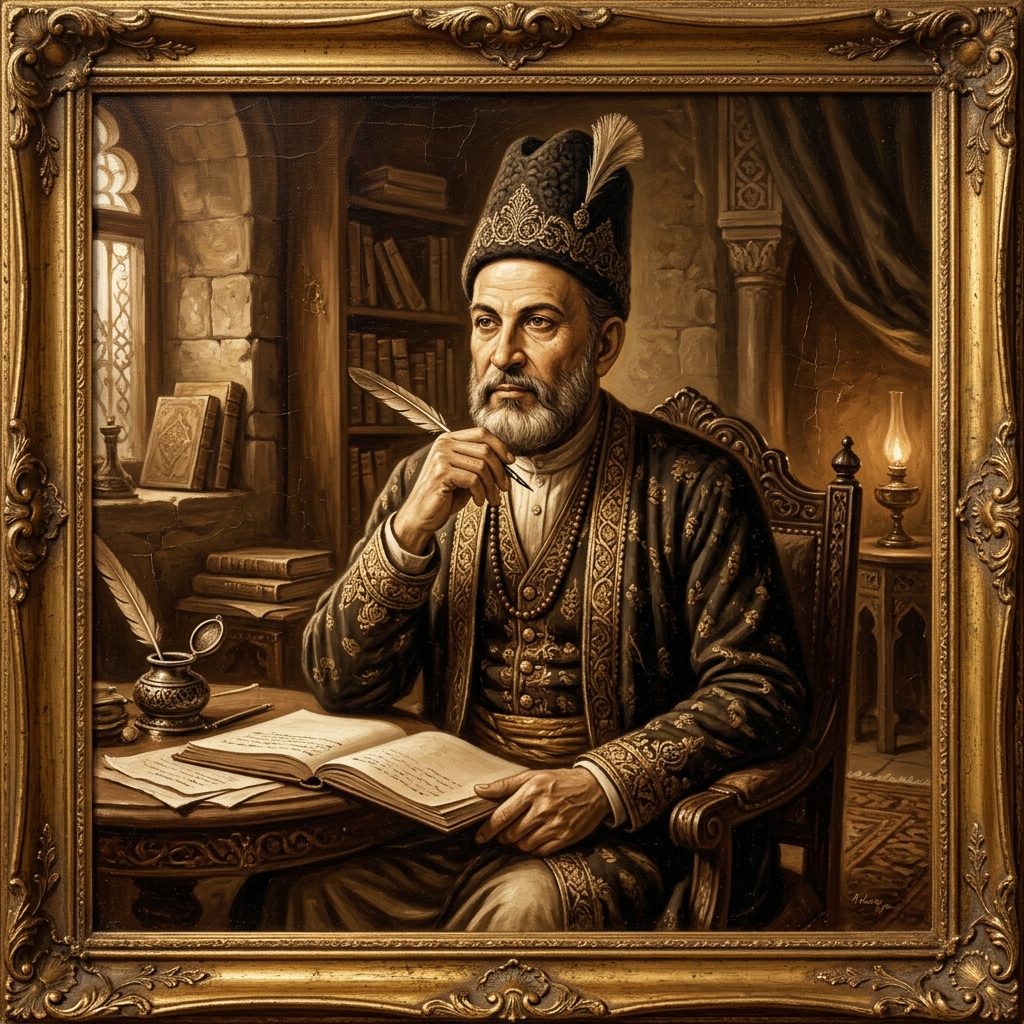
Kaleem Aajiz
Kaleem Aajiz (birth year unknown–2015) was an Indian Urdu poet from Telhara in Bihar, widely regarded as a classical poet in the tradition of Mir Taqi Mir. A gold medallist in B.A. from Patna College, he took his M.A. in Urdu and his PhD (1965) from Patna University, where he then lectured in Urdu for decades and later chaired the Urdu Advisory Committee of the Government of Bihar. His first book of ghazals was released in 1976 by the President of India, and in the 1960s and 1970s he was the only Urdu poet representing Bihar at the annual Red Fort mushaira. His books include Woh Jo Shairi Ka Sabab Hua, written in the wake of Partition violence that took members of his family, and Jahan Khushboo Hi Khushboo Thi. He received the Padma Shri in 1989 and the Ghalib Award, and died on 14 February 2015 at Hazaribagh in Jharkhand.
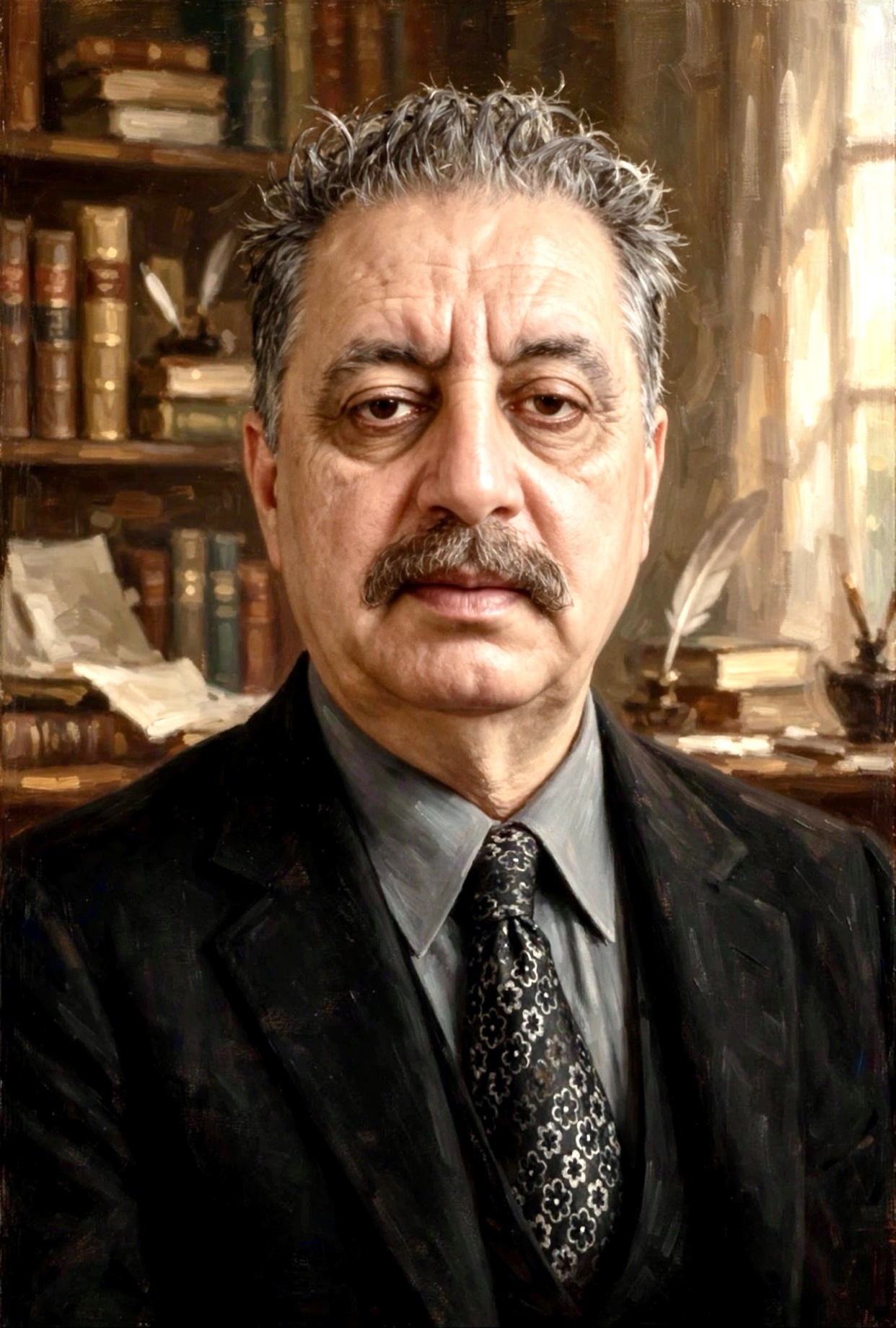
Kamal Malhiabadi
The poet of the Rooh — writing the soul's journey home. Kamal Malhiabadi (Kamaal Ahmad Khan) is a contemporary Urdu poet from Malhiabad, Uttar Pradesh, now based in Houston, Texas. His sher, written in the Sufi tradition, return again and again to one journey: the rooh — the soul that comes from Allah and returns to Him — and the body it briefly lodges in, a saraye, a rented house on the way. Through his series Noor-e-Kalam and Rooh-e-Kalam, and through Safha Global, the literary archive he founded to preserve the heritage of Malhiabad and Avadh for the coming generations, he pairs every sher with its decoding — the concept at its heart, opened layer by layer. His family has served Urdu for generations through Bazm-e-Urdu, the literary organisation led by his younger brother, Rehan Khan. He is writing the history of his homeland, Malhiabad, and a memoir, "Meray Safar Malhiabad Say America Tak".
Khalid Ahmad
Khalid Ahmad (1943–2013) was a Pakistani Urdu poet, playwright and columnist who gave the ghazal new progressive trends. Born on 5 June 1943 in Lucknow, the son of writer and politician Mohammad Mustafa Khan 'Maddah' and brother of the celebrated fiction writers Khadija Mastoor and Hajira Masroor, he migrated to Pakistan after Partition and took an MSc in Physics from Government College, Lahore. He worked as an information officer at WAPDA, retiring as Deputy Controller, while writing the column 'Lamha-Lamha' for the Daily Imroz and later for Jang and Nawa-i-Waqt, plays for Pakistan Television — Kajal Ghar, Kiran and Ghubar — and editing the monthly literary magazine Bayaz for twenty-two years. His books include Daraz Palkon ke Saaye Saaye, Ek Mutthi Hawa, Pehli Sada Parinde Ki and Hatheliyon par Charagh. He received the Pride of Performance in 2011 and died in Lahore on 19 March 2013.
Khalil-ur-Rehman Azmi
Khalil-ur-Rehman Azmi was an Indian Urdu poet and literary critic, and one of the founding fathers of modern Urdu criticism in the subcontinent. Born on 9 August 1927 at Sedhan Sultanpur in Azamgarh district, to Maulana Muhammad Shafi, founder of Madarsatul Islah, he was educated at Aligarh Muslim University, where he stood first-class first in his M.A. in Urdu (1950), tutored the young British Urdu scholar Ralph Russell, and took his Ph.D. in 1957 on the Progressive literary movement in Urdu. He joined Aligarh's Urdu department as lecturer in 1952, became Reader in 1966, and was posthumously elevated to Professor. Imprisoned in 1949 for his political views, he remained aligned with the Progressive Writers' Movement while pioneering modernism in Urdu poetry. His collections include Kaghzi Pairahan (1953) and Naya Ahad Nama (1965), whose title nazm 'Khwabon se dar lagta hai' is among his best-known poems; Zindagi Ae Zindagi appeared posthumously in 1983. He died of leukaemia at Aligarh on 1 June 1978, the year he received the Ghalib Award for Urdu Poetry.
Khumar Barabankvi
Khumar Barabankvi (1919–1999), born Mohammad Haider Khan on 15 September 1919 at Barabanki, Uttar Pradesh, was the classical ghazal's great mushaira voice — a poet whose singing delivery made him, with Jigar Moradabadi, a guarantee of any mushaira's success. He grew up in a house of poets: his father Dr Ghulam Haider wrote salaams and marsiyas as "Bahar", and his uncle Qaraar Barabankvi corrected his early verse. After high school at Government College, Barabanki, he left intermediate studies at Lucknow for poetry, and chose the classical ghazal as his lifelong service — "after analyzing all the genres of speech, I found the classical ghazal to be the most suitable," he wrote. In 1945 he came to Bombay with Jigar and Majrooh Sultanpuri for a mushaira; A. R. Kardar heard him and asked for a song for Shah Jahan, sung by K. L. Saigal — the start of a film career that included Saaz aur Awaaz and K. Asif's Love and God, though he soon grew dismayed at falling film standards and returned to the ghazal. His collections Aatish-e-Tar, Raqs-e-Mai and Shab-e-Taab carry the voice his audiences knew: gentle, musical, steeped in love and longing, and later, after he gave up drinking, in a deeper tenderness. He died on 19 February 1999 and lies at Karbala Civil Lines, Barabanki, where the Khumar Memorial Academy keeps his name.
Khwaja Aziz-ul-Hasan Majzoob
Khwaja Aziz-ul-Hasan Ghori "Majzoob" (1884–1944), born 12 June 1884 at Orai in Jhelum district, U.P., was a Sufi poet of the Chishti-Sabiri tradition and an authorized disciple and khalifa of Ashraf Ali Thanvi. He first wrote under the takhallus "Hasan"; after coming under Thanvi's influence he became "Majzoob" — the absorbed one. Educated at Aligarh (B.A., LL.B.), he served first in the excise department and then seven years as deputy collector; finding the post against his temperament, he took a lower salary in the education department, where he served as deputy inspector of Islamic makatib and then Inspector of Schools (U.P.), retiring on pension. He had no ustad in poetry; his kalam — hamd, munajat, na'at, marsiya, ghazal, nazm — is suffused with spirituality and gnosis (irfan). Nearly two hundred khulafa of Thanvi recited his mystical verse with devotion, and it remains beloved in the Thanvi silsila to this day. Per his will his kalam was first published as Kalam-e-Majzoob and then continuously as Kashkol-e-Majzoob. In prose he compiled Ashraf-us-Sawaneh (4 volumes, 1935–1943), the first and most authoritative biography of his master. He died at Orai on 17 August 1944.
Khwaja Ghulam Farid
Khwaja Ghulam Farid (1845–1901) was a Sufi poet and saint of the Saraiki country, born at Chachran Sharif in the old Bahawalpur state, on the banks of the Indus. The son of Khwaja Khuda Bakhsh, he lost both parents while still a boy and was raised and taught by his elder brother, Fakhr Jahan. He belonged to the Chishti-Nizami order, and became the custodian of the shrine at Kot Mithan, across the river from his birthplace. In 1876 he made the pilgrimage to Makkah. He was called the poet of seven tongues — Saraiki, Urdu, Persian, Sindhi, Punjabi, Braj Bhasha and Arabic — but his fame rests on his Saraiki verse: the kafis of the Diwan-e-Farid, sung still at shrines and festivals, where the desert of Rohi, the tall red date-palms, the cranes in flight and the long wait for the Beloved carry a longing that is at once earthly and divine. He also left an Urdu divan of ghazals and prose works in Persian. He died in 1901 at Chachran and was buried at Kot Mithan, where his shrine still draws devotees from across the Saraiki country, and his yearly urs keeps his kafis alive in song.
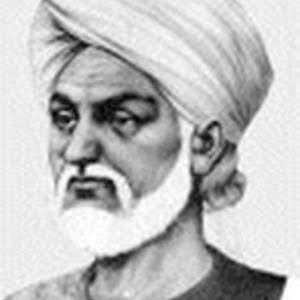
Khwaja Mir Dard
The Sufi saint of Delhi's classical school — the poet who made pain a prayer.
Kunwar Mohinder Singh Bedi 'Sahar' (1909–1992), born at Chak Bedi in Montgomery District, Punjab, was an Urdu poet whose pen name meant "daybreak" — and whose verse lived up to it. Born into a Bedi zamindar family tracing its line to Guru Nanak, he fell in love with Urdu in school and began writing ghazals while studying at Lahore. He joined the Indian Administrative Service, served as City Magistrate of Delhi, and worked alongside Nehru and Patel to restrain violence and resettle refugees after Partition — the same Partition that uprooted his own family to Fazilka. His poetry is traditional in form and humane in temper: love and yearning beside unity, peace between India and Pakistan, and a gentle humour. Khushwant Singh called him "the stoutest bridge between India and Pakistan". His first collection, *Tulu-e-Sahar* (1962), played on his own name — the advent of daybreak — and his autobiographical poems *Yadon Ka Jashn* (1983) remain a document of Punjab before and after Partition. Jagjit Singh sang eight of his ghazals on the album *Forget Me Not*. He died on 18 July 1992.