
Poets Directory (شعرائے کرام)
Explore profiles, portraits, life biographies, and complete poetry of classical and modern Urdu luminaries.
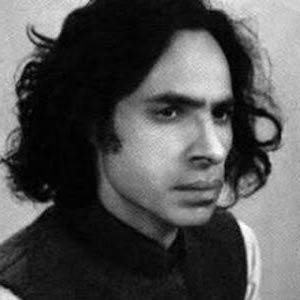
Jaun Elia
Jaun Elia was an unconventional scholar, philosopher, and poet whose raw emotional intensity, sharp existential irony, unapologetic nihilism, and theatrical recitation style earned him an immense cult following worldwide.
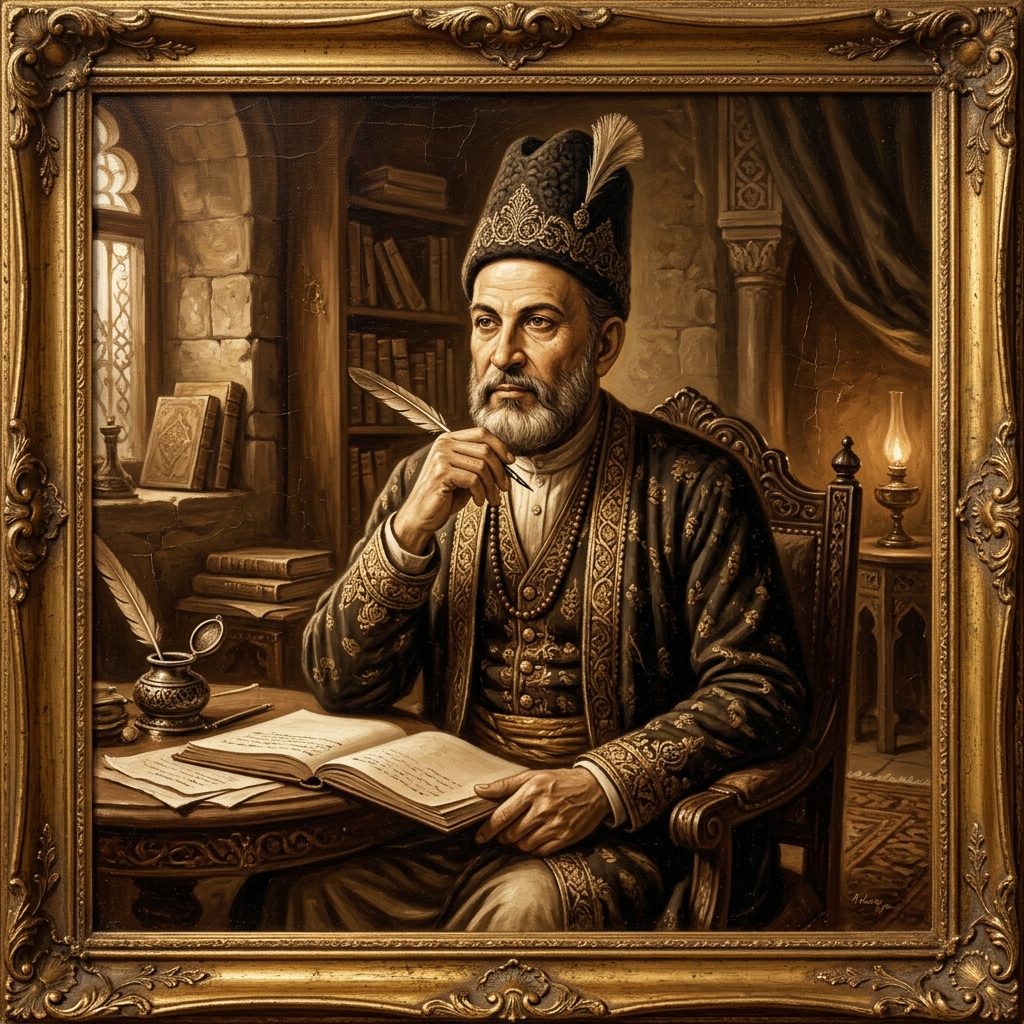
Jafar Ali Hasrat
Mirza Jafar Ali Hasrat was an eighteenth-century Lucknow poet and a prominent contemporary of Mir Taqi Mir, known for his depiction of physicality in romantic poetry. He belonged to the early Lucknow school, at a moment when Urdu ghazal was finding a voice distinct from Delhi's, and his influence is visible in his most famous disciple, Qalandar Bakhsh Jurat, who carried the same frank, bodily idiom further. Hasrat's own surviving work is small — one ghazal and two celebrated couplets, with a *Kulliyat-e-Hasrat* published in 1966 — but its note is unmistakable: a lover who accepts the beloved's cruelty as the beloved's pleasure, and who would rather be kept in the cage than freed without wings. That combination of devotion and defiance, tenderness and bodily directness, marks him as a Lucknow voice in his own right, not merely as Mir's contemporary.
Jagan Nath Azad
Jagan Nath Azad (1918–2004) was an Indian Urdu poet, writer and academician, and the foremost modern authority on the life and thought of Muhammad Iqbal. Born on 5 December 1918 at Isa Khel in Mianwali district, the son of the poet Tilok Chand Mehroom, he studied at Gordon College, Rawalpindi, and at Punjab University, Lahore, before a long career in journalism and government service in Delhi and Srinagar. After retiring in 1977 he became Professor and Head of Urdu at the University of Jammu. He wrote more than seventy books — poetry, criticism, biography and travelogue — including about a dozen studies of Iqbal in Urdu and English and an Urdu translation of Iqbal's Javed Nama. He is widely credited with writing Pakistan's first national anthem at Muhammad Ali Jinnah's request in 1947. He presided over the Anjuman Taraqqi-i-Urdu (Hind) from 1993 until his death in New Delhi on 24 July 2004.
Jalil Manikpuri
Jalil Hassan 'Jalil' Manikpuri (1862–1946) was a post-classical Urdu poet of the Lucknow tradition and court poet of Hyderabad. Born in Manakpur, district Pratapgarh in Uttar Pradesh, he was the eldest son of Abdul Karim, memorised the Qur'an by twelve, and studied Persian and Arabic at Lucknow's Madrasa Farangi Mahal. With his elder brother Khalil, also a poet, he became a disciple of Amir Ahmed Minai, who entrusted him with his great dictionary Amir-ul-Lughat. Following Minai to Hyderabad in 1900, Jalil succeeded Dagh Dehlvi as Ustad-e-Shah — court poet to Nizam VII Mir Osman Ali Khan — in 1909, a position he held through decades of honoured leisure. His collections include Taj-e-Sukhan, Sartaj-e-Sukhan and the later Kainat-e-Jalil. Known for flawless, fluent diction without obscurity, he wrote ghazals of love, beauty and longing in a classical mould. He died in Hyderabad on 6 January 1946 and was buried at Dargah Yusufain.
Jamal Ehsani
Jamal Ehsani (1951–1998) was a Pakistani poet noted for his work in the ghazal, and a favourite poet in the student circles of Urdu literature. Born in Sargodha on 21 April 1951, he received his primary education there and moved to Karachi at a very young age, where he continued his studies and worked in a variety of jobs. Two of his poetry books were published in his lifetime — *Sitara-e-Safar* (1982) and *Raat Ke Jaage Hue* (1986) — and a third after his death with the help of Dr Fatima Hasan; his complete poetry was published posthumously as *Kulliyat-e-Jamal* (2008). He died in Karachi on 10 February 1998, aged 46.
Jameeluddin Aali
Jameeluddin Aali (20 January 1925 – 23 November 2015) was a poet, institution-builder and public voice of Pakistan — the man who gave the nation its most sung anthem of itself and revived the doha in Urdu. Son of Nawab Sir Amiruddin Ahmed Khan of Loharu, himself a poet, and Syeda Jamila Begum, from Khwaja Mir Dard's family — his paternal grandfather was a disciple and friend of Ghalib — he took a BA in Economics from Anglo Arabic College, Delhi (1944), and migrated to Karachi on 13 August 1947. He passed the CSS examination in 1951, joined the Pakistan Taxation Service and rose to income-tax commissioner, served as Officer on Special Duty at President House (1959–1963), joined the National Bank of Pakistan in 1967 and retired as vice-president in 1988, and took an LLB/FEL from the University of Karachi (1971). Alongside that career he co-founded the Pakistan Writers' Guild, served as honorary secretary of Anjuman Taraqqi-e-Urdu Pakistan for decades, chaired the Urdu Dictionary Board, and wrote a newspaper column for some fifty years. His long poem Insaan runs to some 4,000 verses; his travelogues are Duniya Mere Aage and Tamasha Mere Aage; his collections include Ghazlein Dohey Geet, La Hasil, Goshai-e-Bisaat, Harf-e-Chand and Aye Mere Dasht-e-Sukhan. He revived the doha in Urdu, wrote the milli naghma "Jeevay Jeevay Pakistan" (named here, never quoted), and received the Pride of Performance (1991), Hilal-e-Imtiaz (2004) and Kamal-e-Fun (2006). He served as a Senator from 1997 to 2003.
Jan Nisar Akhtar
Jan Nisar Akhtar (18 February 1914 – August 1976) was a Progressive poet who carried Urdu verse from the mushaira into the cinema hall. Son of the poet Muztar Khairabadi and great-grandson of Fazl-e-Haq Khairabadi, he took a BA (Hons) and MA in Urdu from Aligarh Muslim University, lectured at Victoria College, Gwalior (1940), and became Professor of Urdu at Hamidia College, Bhopal. A member of the Progressive Writers' Movement, he moved to Bombay in 1949 and became a Bollywood lyricist, writing 151 songs — among them Yasmin (1955), "Aankhon Hi Aankhon Mein" in CID (1956), Prem Parbat (1974), Noorie (1979) and "Ae Dil-e-Naadaan" in Razia Sultan (1983). His poetry collections include Nazr-e-Butaan, Salaasil, Javidaan, Pichali Pehar, Ghar Angan and Khaak-e-Dil, which won the 1976 Sahitya Akademi Award in Urdu. His style is romantic and revolutionary at once, in simple but eloquent language with extensive Hindi words. He was the father of the lyricist Javed Akhtar and the psychoanalyst Salman Akhtar.
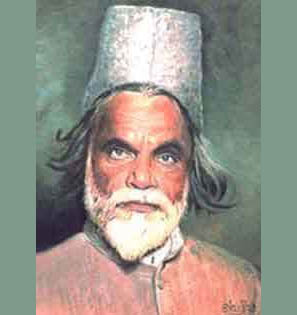
Jigar Moradabadi
Ali Sikandar (1890–1960), known by his takhallus **Jigar Moradabadi**, was one of the great Urdu ghazal poets of the twentieth century. Born in Moradabad, he lost his father at an early age, received an oriental education in Arabic, Persian and Urdu, and briefly worked as a travelling salesman. Still in his teens he moved to Gonda, near Lucknow, where he befriended the poet Asghar Gondvi and made the town his permanent home. His first lessons in poetry came from his father Ali Nazar, a poet himself; he later sought guidance from Dagh Dehlavi. An iconic mushaira poet famed for musical, romantic verse on love and wine, he published *Daagh-e-Jigar* (1928), *Shola-e-Toor* (1932) and *Aatish-e-Gul* (1954), which won the Sahitya Akademi Award in 1958. He was the second poet after Muhammad Iqbal to receive an honorary D.Litt. from Aligarh Muslim University, and a mentor to Majrooh Sultanpuri. He is known as *Rais-ul-Mutaghazzileen* — the prince of ghazal writers.
Joshish Azimabadi
Joshish Azimabadi (1737–1801) was a classical Urdu poet of Azimabad — the 18th-century name for Patna in Bihar — and a prominent contemporary of Mir Taqi Mir. He wrote "at far-off Azimabad in Delhi style," proof that the Delhi ghazal had travelled well beyond the capital by the mid-1700s and found a serious practitioner in the east. Little else about his life is preserved: no given name, teacher or court attachment is reliably recorded, and his work survives principally through his diwan, Deewan-e-Joshish, in a 1976 Bihar Urdu Academy edition. What the couplets show is a poet equally at home in love's dishevelled complaint and in Sufi argument. He turns the beloved's tress into a mirror of his own distraught state, blesses a cruel beloved with ironic courtesy, and, in his most philosophical verses, dissolves the quarrel of temple and sanctuary into one truth: the Kaaba and the idol-house are one, and the only road worth taking leads to the house of the heart.
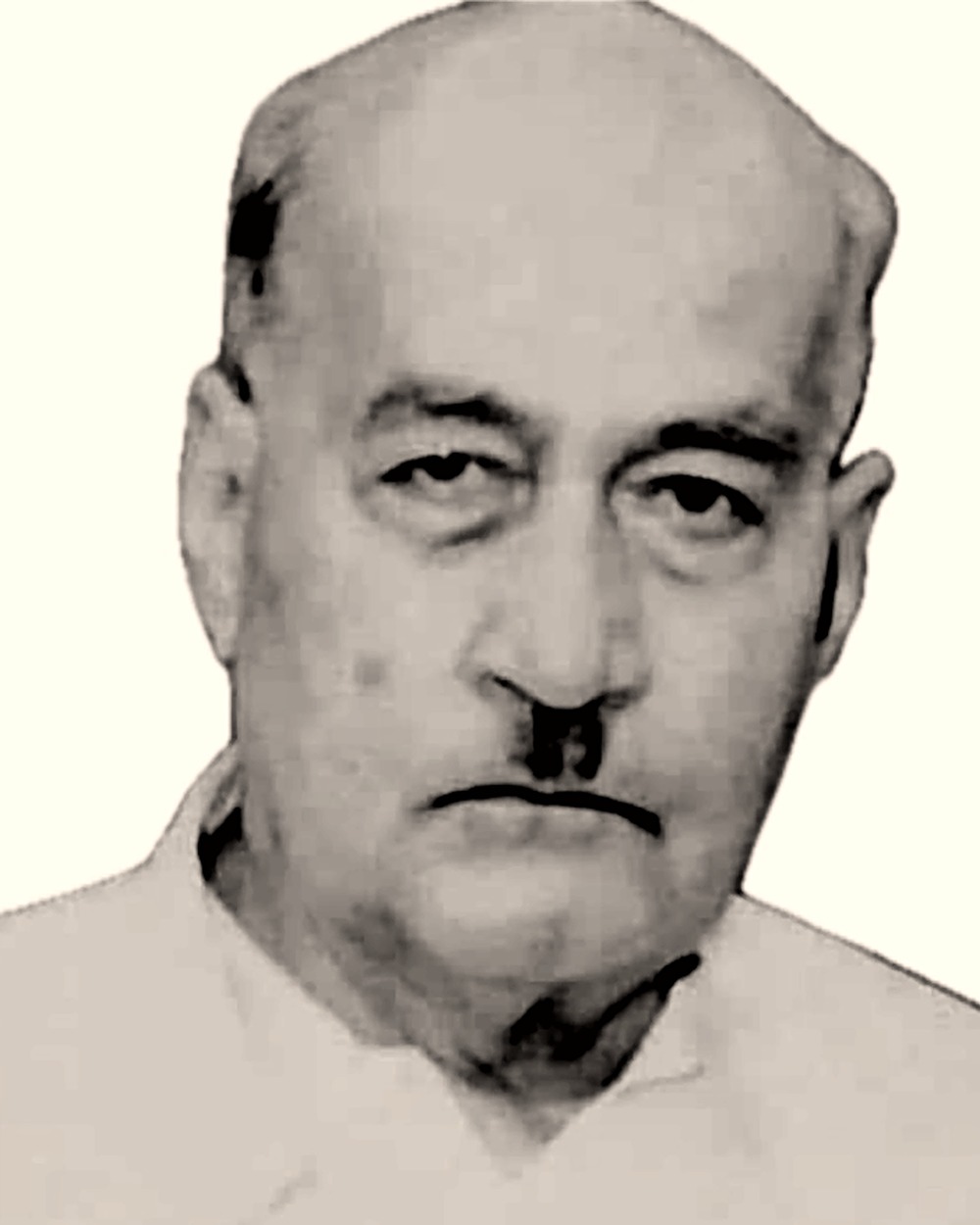
Josh Malihabadi
Shaair-e-Inqilab — the poet whose slogan was "revolution, revolution, and revolution."