Poets Directory (شعرائے کرام)
Explore profiles, portraits, life biographies, and complete poetry of classical and modern Urdu luminaries.
Ibn-e-Insha
Ibn-e-Insha (1927–1978), born Sher Muhammad Khan in Phillaur, Jalandhar district, Punjab, was one of the most beloved voices of modern Urdu — a poet of distinctive diction laced with the earthy speech of the Hindi-Urdu complex, and one of the finest humorists of Urdu. After Partition he settled in Karachi; he took his B.A. from Punjab University (1946) and M.A. from the University of Karachi (1953), and worked with Radio Pakistan, the Ministry of Culture and the United Nations, whose travels fed his celebrated travelogues — *Chalte Ho To Cheen Ko Chaliye*, *Awara Gard Ki Diary*, *Ibn-e-Battuta Ke Taqabum Mein*, *Duniya Gol Hai*. His poetry collections *Chand Nagar*, *Is Basti Ke Ik Kooche Mein* and *Dil-e-Wehshi*, his children's verse *Bloo Ka Basta*, and his Urdu translation of Chinese poems (*Chini Nazmein*, 1960) followed. He received the Pride of Performance in 1978. He died of Hodgkin's lymphoma in London on 11 January 1978 and was buried in Karachi.
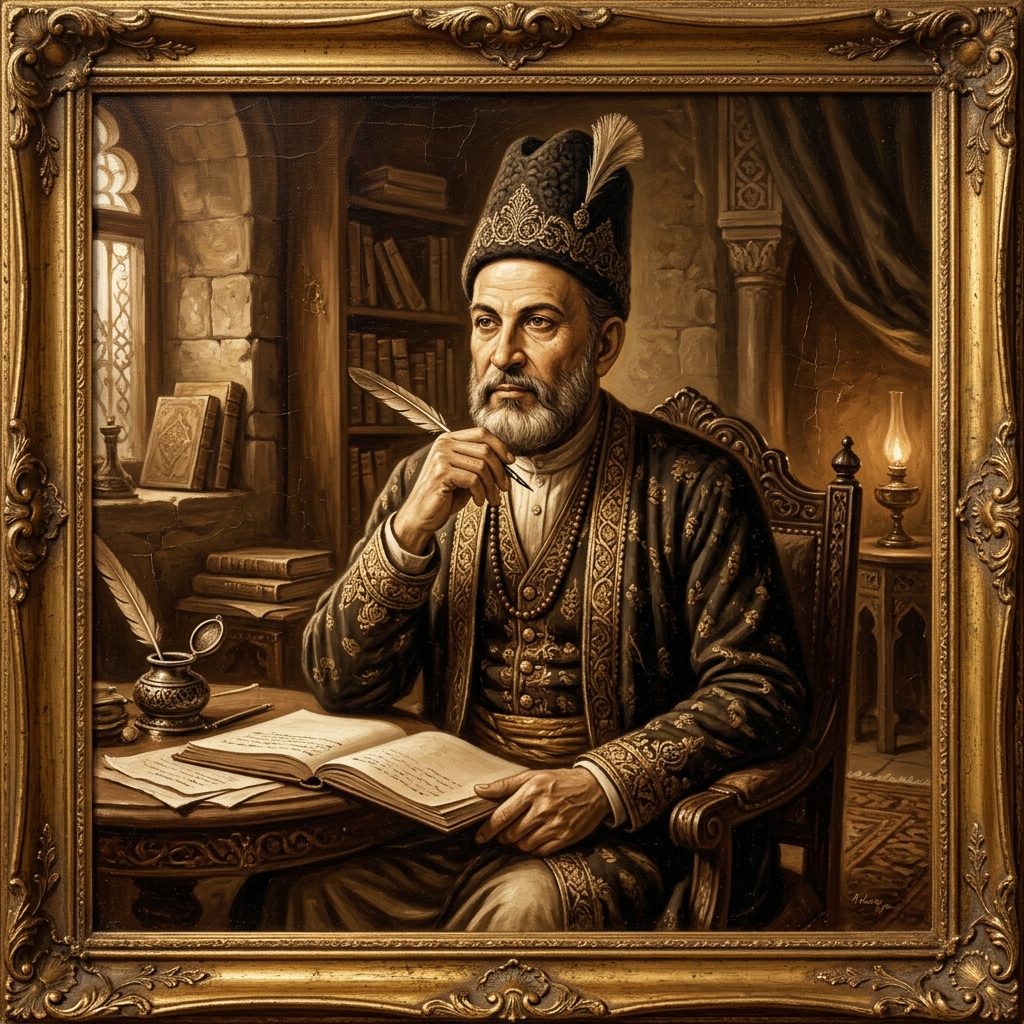
Ibn-e-Nishati
Muhammad Mazharuddin Ibn-e-Nishati was a seventeenth-century Dakhni court poet of Golconda under Sultan Abdullah Qutb Shah, remembered for a single great work: the masnavi Phulban ("Flower Garden"), composed in 1656. In about 3,500 lines and 2,000 couplets, Phulban retells in Dakhni Urdu the Persian Basatin ("Gardens") of Ahmad Zubairi, a fourteenth-century work from the reign of Muhammad bin Tughluq. It is a romance of adventures, anecdote leading into anecdote, opening with a tale told by a dervish to the king of a mythical city of gold, and following, among others, Princess Samanbar's search for Prince Humayun. Literary histories place Nishati among the major poets of the first Dakhni period, beside Wajhi, Ghawwasi and Nusrati. His surviving ghazal, in the same Dakhni, is a poet's boast in garden language: his garden is ever fresh, his bouquet always in bloom, and every verse stands out in delicacy like the brow of the beauties.
Imdad Ali Bahr
Shaikh Imdad Ali, known by his takhallus Bahr, was a nineteenth-century poet and scholar of Lucknow and a disciple of Imam Bakhsh Nasikh. Born around 1810, he devoted his life to language itself: he was praised for his precision of expression, his linguistic research, and his art of presentation, and his prose work *Bahrul Bayan* takes up the rules of Urdu. Patronage took him briefly to Rampur, where Nawab Kalb Ali Khan honoured his learning with a salary, but he returned to Lucknow and lived on a small stipend from the daughter of Nawab Amjad Ali Shah. He never compiled his Diwan in his lifetime; after his death in 1878 his friend Syed Muhammad Khan Rand gathered it, and the sole manuscript of *Bahrul Bayan* survives in the Raza Library, Rampur. Bahr's ghazals are those of a craftsman — witty, exact, and fond of turning a familiar image until it surprises.
Insha Allah Khan Insha
Lucknow's dazzling wit — the poet-linguist who gave Urdu its first grammar and its most playful tales.
Irfan Siddiqi
Irfan Siddiqi (1939–2004) was a prominent modern Urdu poet of the neo-classical school, born at Badayun, Uttar Pradesh, on 8 January 1939. He took a postgraduate degree in sociology and joined the Central Information Service in 1962, serving in the Press Information Bureau until his retirement in 1997 as Deputy Principal Information Officer — a government career he carried alongside a lifetime of poetry. His collections run from *Canvas* (1978) through *Shab-e-Darmiyan* (1984), *Saat Samawat* (1992), *Ishq-Nama* (1997) and *Hawa-e-Dasht-e-Mariya* (1998), gathered in *Dariya* (1999). Classical in form and contemporary in feeling, his ghazals keep the old architecture — dream, lamp, night, desert — and fill it with a modern inwardness. He died at Lucknow on 15 April 2004.
Ismail Merathi
The pioneer of children's Urdu poetry — the schoolroom verses generations learned by heart. Ismail Merathi (1844–1917), born Muhammad Ismail in Meerut, is the pioneer of children's Urdu poetry. Home-schooled, then trained in Persian under Mirza Rahim Beg (a contemporary of Ghalib), he took a teaching certificate from the Normal School, Meerut, and spent his working life as an educationist — Persian teacher at Saharanpur (1867/68), then at the Central Normal School, Agra (1888), retiring in 1899. His fame rests on poems a child can sing and a sage can quote: *Nasihat*, *Barsaat*, *Humari Gaye*, *Subah Ki Aamad*, *Sach Kaho* — in Pakistan's primary-school curriculum to this day. He translated English poems into Urdu (*Reza-e-Jawaher*, 1885), wrote the geography textbook and the Urdu primers that taught generations to read (*Urdu Zuban Ka Qayeda*, *Urdu Ki Pehli* through *Panchvi Kitab*), and compiled his *Kulliyat-e-Ismail* (1910). A philanthropist, he founded the Madrasa-tul-Banat girls' school in Meerut in 1909 (today the Ismail National Mahila PG College), and the British government honoured him with the title "Khan Sahib" (1912). He died in Meerut on 1 November 1917, aged seventy-three.
Imam Bakhsh Nasikh
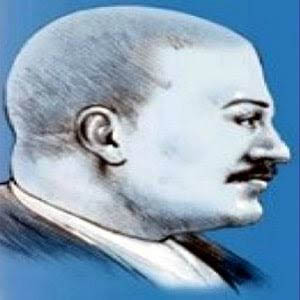
Imam Bakhsh Nasikh (birth year disputed — d. 16 August 1838, Lucknow), known as Sheikh Imam Bakhsh Nasikh, was born in Faizabad and made Lucknow his home, becoming the founder of the Lucknow school of Urdu poetry. He is celebrated less as a poet of deep feeling than as the supreme craftsman of the art: he deliberated upon language, syntax, and poetic device with unmatched technical virtuosity, expanding Urdu's vocabulary and refining its idiom while respecting classical norms. His legendary rivalry with Khwaja Haidar Ali Aatish — Nasikh the polished craftsman against Aatish the soulful natural — shaped the literary life of Lucknow in the 1830s. Forced into exile by court politics, he returned to Lucknow after the death of minister Hakim Mehdi in 1837 and died there in 1838. His diwans, later printed together as the *Kulliyat-e-Nasikh*, remain monuments of the Lucknow style.