
Poets Directory (شعرائے کرام)
Explore profiles, portraits, life biographies, and complete poetry of classical and modern Urdu luminaries.
Zafar Ali Khan
The journalist-poet of the freedom movement — *Zamindar*'s editor, whose nazms were acts of resistance. Maulana Zafar Ali Khan (1873–1956), born in Kot Marath in Sialkot district, was the journalist-poet of India's freedom movement. Educated at Mission High School Wazirabad and Aligarh's Anglo Mohammedan College (BA), he took over the Daily *Zamindar* of Lahore in 1908 — the paper his father Maulvi Sirajuddin Ahmad had founded in 1903 — and made it northern India's most influential Urdu daily. His poetry was a mode of resistance: nationalist nazms that opposed the British, supported the Khilafat Movement, and rejected Gandhi's non-violence in favour of direct confrontation. The price was five years' rigorous imprisonment under Punjab's Governor Michael O'Dwyer. His diwans — *Baharistan* (1937), *Nigaristan*, *Chamanistan* (1944), *Raharistan* — carry the same fire, alongside essays, a play (*Jang-e-Rus-o-Japan*), and a celebrated Urdu translation of Kipling's *Jungle Book*. His naats, including "Woh Shama Ujala Jis Ne Kiya" sung by Mehdi Hassan, are classics of the genre. A founding member of the Majlis-e-Ahrar-e-Islam and a close associate of Maulana Muhammad Ali Jauhar, he was honoured after Partition with a Pakistan Post commemorative stamp. He died on 27 November 1956.
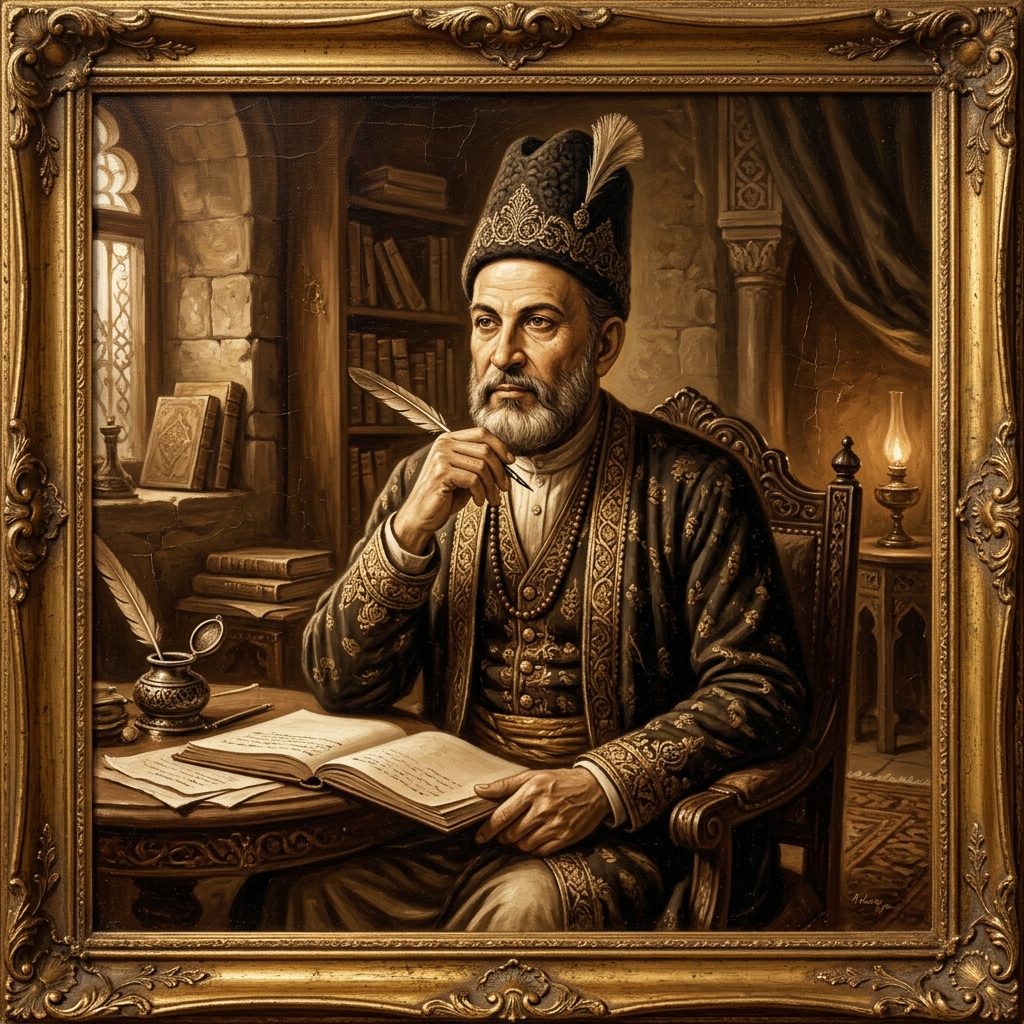
Zaheer Kashmiri
Zaheer Kashmiri (1919–1994) was a Pakistani Urdu poet, critic and film writer, a leading voice of the Progressive Writers' Movement. Born Peer Dastgeer Zaheer on 21 August 1919 at Amritsar, into a family that had migrated generations earlier from Srinagar, Kashmir, he took an MA in English and began writing poetry at eleven. He became editor of Savera, the Progressive Writers Association's literary magazine — serving on its board alongside Faiz Ahmed Faiz and Ahmad Nadeem Qasmi — and wrote the landmark essay "Meri Zindagi, Mera Fann" (Savera, 1951). Reaching Lahore around Partition, he worked in films — story and direction of Teen Phool (1961), stories for Anjam (1957) and Sheikh Chili (1958), lyrics for seven films — and from 1959 wrote a column in the daily Ehsaan under the pen name Majnu. His poetry collections include Azmat-e-Aadam (1955), Taghazzul, Chiragh-e-Aakhir-e-Shab, Raqs-e-Junoon (1982) and Auraaq-e-Musawwir; his critical work Adab Ke Maaddi Nazariye argued for a materialist reading of literature. His ghazal turns the classical idiom toward the progressive cause: the lover's lamp becomes the last lamp of the night, burning so that after it there is light, not darkness. He died in Lahore on 12 December 1994; the Pride of Performance was conferred on him after his death.
Zia Fatehabadi
Zia Fatehabadi (1913–1986) — born Mehr Lal Soni on 9 February 1913 at Kapurthala, Punjab — was a modern Urdu poet of the ghazal and the nazm, and a disciple of Seemab Akbarabadi in the line of Dagh. His family came from Fatehabad, near Tarn Taran, the town whose name he carried; "Zia", meaning Light, was the pen name his teacher chose for him. He wrote his first ghazal in 1925, still a schoolboy in Jaipur, and became Seemab's disciple in 1930, remaining true to his ustad all his life and working to keep his legacy alive. His first collection, Tullu (Dawn), appeared in 1933 while he was still at college, followed by Noor-e-Mashriq (The Light of the East) in 1937. He took a B.A. with honours in Persian in 1933 and an M.A. in English in 1935, then joined the Reserve Bank of India in 1936, serving for thirty-five years and retiring as Deputy Chief Officer in 1971. He married Raj Kumari in 1942 and made Delhi his home after retirement. Across six decades he produced nineteen works — eleven collections of poetry, among them Nai Subah (1952), Gard-e-Raah (1963), Husn-e-Ghazal (1964), Dhoop aur Chandni (1977), Rang-o-Noor (1981) and Soch ka Safar (1982) — alongside qataat, rubaiyat, geets, sonnets, essays and letters. He never sought public recognition or state awards, and kept a low profile all his life; his verse is plain, musical and hopeful, written in the common man's language, with light and dawn as its abiding images. He died in Delhi on 19 August 1986, after a long illness.
Zia Jalandhari
Zia Jalandhari (1923–2012) was a Pakistani Urdu poet, broadcaster and television chief, and a pioneering member of the Halqa-e-Arbab-e-Zauq, the Circle of Connoisseurs. Born Syed Zia Nisar Ahmad on 2 February 1923 in Jalandhar, his family moved to Lahore, where he took an MA in English Literature from Government College and lectured in English at Islamia College. He began his broadcasting career at All India Radio and joined Radio Pakistan in 1948, later serving as Managing Director of Pakistan Television. His poetry — in collections such as Narsa (1966), Sar-e-Sham (1968), Dam-e-Subh (2003) and the Kulliyat-e-Ziya (2007) — carries the Halqa's modernist inwardness: plain speech, moral clarity and the world seen through the beloved's eyes. He received the Pride of Performance in 2006 and a National Literary Award for Dam-e-Subh, and died in Islamabad on 13 March 2012.