Poets Directory (شعرائے کرام)
Explore profiles, portraits, life biographies, and complete poetry of classical and modern Urdu luminaries.
Sahir Ludhianvi
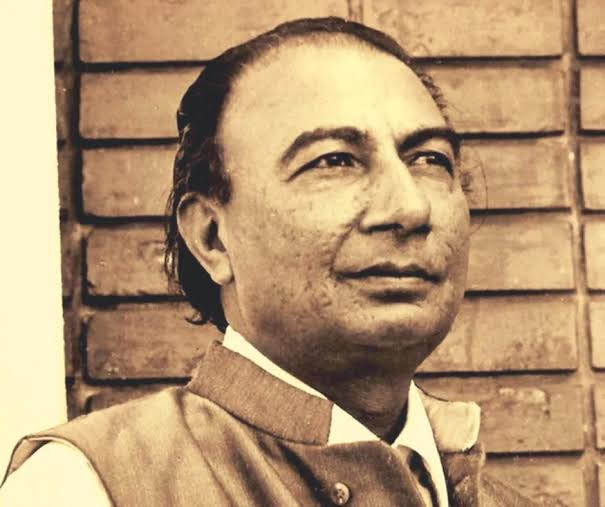
Sahir Ludhianvi was an iconic progressive poet and the most influential lyricist in Hindi-Urdu cinema. His poetry in "Talkhiyan" challenged feudal hypocrisy, religious dogma, and celebrated working-class dignity.
Safi Lakhnavi
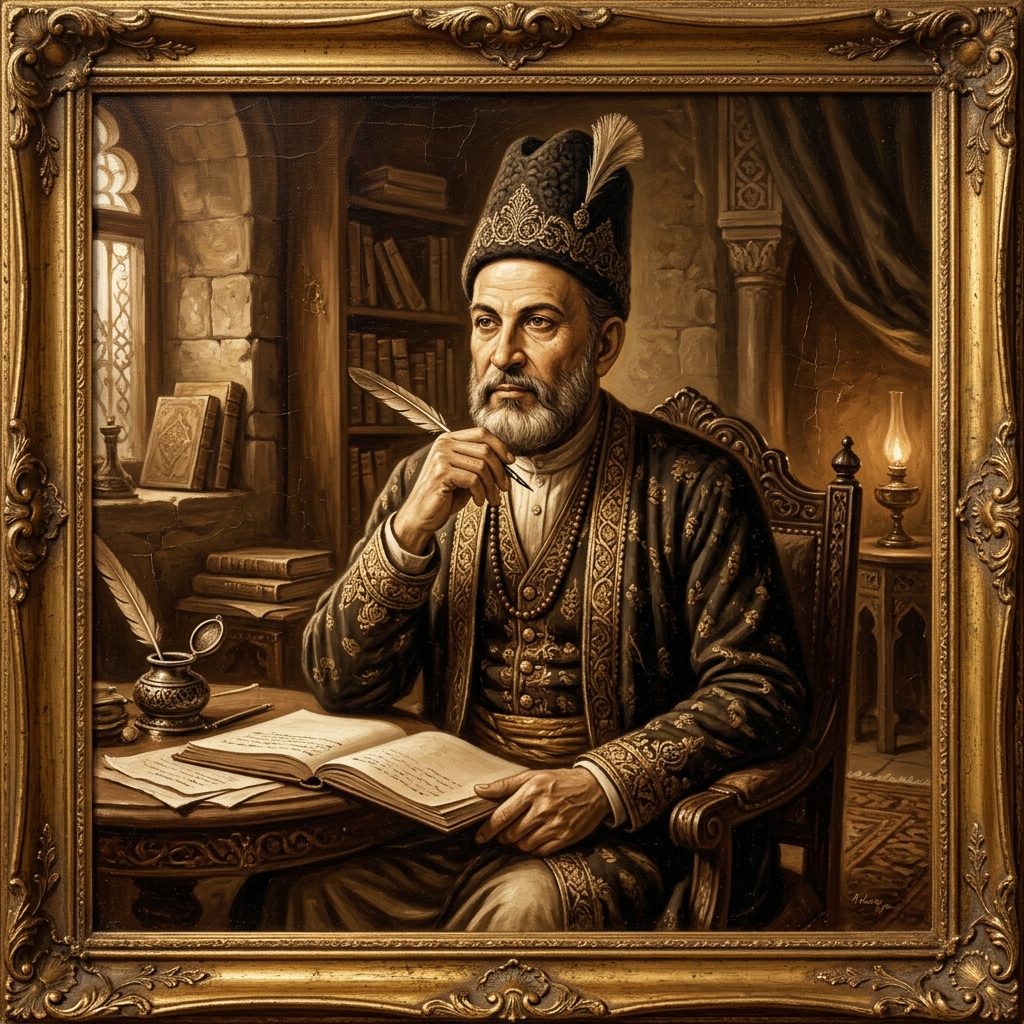
Safi Lakhnavi (1862–1950) was a Lucknow Urdu poet of the people, honoured as Lassan-ul-Qaum, the spokesman of the people. Born Syed Ali Naqi Zaidi in Lucknow, he received his early education from his father, learnt Persian from Najmuddin Kakorvi and Arabic from Maulvi Ahmad Ali, took his Entrance degree from Canning College, and taught English in the school attached to that college. In 1883 he joined government service in the revenue department. He began writing verse at the age of thirteen without an ustad, when having a teacher was the norm, and his poetry broke from traditional Urdu verse in its plain, sweet language of the common folk. He preferred the nazm to the traditional ghazal, wrote patriotic poems on the social, political and cultural condition of his times, and also practised qasida, mathnawi and rubai. His works are gathered in Aagosh-e-Maadar, Tanzeem-ul-Hayaat and Deewan-i-Safi.
Saghar Siddiqui
Muhammad Akhtar "Saghar" Siddiqui (1928–1974), remembered as the Shaair-e-Dard (Poet of Pain), was born in Ambala in British India's Punjab and began writing poetry as a child. He first wrote under the pen name Nasir Hijazi before becoming known as Saghar. After Partition in 1947 he migrated to Pakistan and settled in Lahore, where his melodious ghazals made him a beloved mushaira voice. He wrote for films and founded a literary magazine that won critical praise but failed commercially. Disappointment, financial ruin and addiction followed, and in his later years he lived on the streets of Lahore, still composing verse and still holding mushairas by candlelight on the footpaths. In July 1974 he was found dead on a street corner in Lahore, aged 46, and was buried at the Miani Sahib graveyard. Much of his later work is lost or unpublished, which is part of why the voice that survives — pain stated plainly, without ornament — still moves readers so directly.
Sail Dehlvi
Sail Dehlvi (1867–1945), born Nawab Sirajuddin Ahmad Khan, was a later-classical poet of the Delhi school and a carrier of Dagh Dehlavi's tradition. Born in Delhi on 29 March 1867, he was the son of Mirza Shahabuddin Ahmad Khan Saaqib and the grandson of the Loharu jagirdar Nawab Ziyauddin Ahmad Khan Nayyar Darakhshan; his name is said to have been suggested by Ghalib himself. He studied Arabic, Persian, Sanskrit and Unani medicine, became Dagh's disciple and later his son-in-law, and was a remarkable presence in the mushairas of his day. After Dagh's death, his rivalry with Bekhud Dehlvi over Dagh's legacy grew so bitter that Sail withdrew from mushairas altogether. His divan remained unpublished. He died in Delhi on 25 September 1945 and was buried at Mehrauli.
Saqib Lucknawi
Saqib Lucknawi (1869–1946), born Mirza Zakir Hussain Qizilbash in Akbarabad (Agra), was the model Lucknow-school poet of the neo-classical tradition — "the very model of a Lakhnavi shayar." Raised in a family of Persian descent, he was educated in Arabic, Persian and Urdu, and in English at St. John's College, Agra. After his father's death left the family in difficulty, he tried his hand at business in Lucknow, served as personal secretary to the Iranian consul in Calcutta, and finally — in 1908 — accepted a post at the court of the Raja of Mahmudabad in Sitapur, where he remained until his death. His succinct, polished couplets — many of which attained the status of Urdu proverbs — made him beloved; the filmmaker S.U. Sunny was so taken by "Bade shauq se sun raha tha zamana" that he used it as the recited motto of his films *Mela* (1948) and *Kohinoor* (1960). His diwan, *Tajalli-e-Shahab-e-Saqib*, was published in 1936. He died at Sitapur on 24 November 1946.
Shabnam Shakeel
Shabnam Shakeel (1942–2013), born in Lahore, was a modern Urdu poet whose ghazals carry a deep feminist consciousness in a classical frame. She grew up in a literary home: her father, Syed Abid Ali Abid, was a poet and academician, and her childhood circle included Ghulam Mustafa Tabassum and Faiz Ahmad Faiz. Educated at Kinnaird College and Islamia College, Lahore, she took her M.A. in Urdu from Oriental College, Lahore, and lectured at several colleges. Her first book, *Tanqeedi Mazameen* (1965), was criticism; her poetry collections — *Shab Zaad* and *Masaafat Raigaan Thi* (2008) among them — speak in a woman's voice about love, failure, dignity and the road's dust, with the ghazal's discipline intact. Rekhta, which carries 53 of her ghazals, describes her as a poet who "deeply expresses feminist consciousness". Pakistan honoured her with the Pride of Performance. She died in Karachi on 2 March 2013, ten days short of her seventy-first birthday, and was buried in Islamabad.
Shad Azimabadi
Shad Azimabadi (1846–1927), born Syed Ali Mohammad in Azimabad (Patna), was a master of the ghazal and the marsiya and one of Bihar's greatest literary figures. Born into a wealthy and respected Syed family, he received a classical education in Arabic, Persian and Urdu, and trained under several masters of the age — chief among them Shah Ulfat Hussain Faryaad. The British government titled him Khan Bahadur, and he served Patna as Honorary Magistrate and Municipal Commissioner. The Urdu scholar Ali Jawad Zaidi called him "a saviour of the ghazal"; the critic Kalimuddin Ahmad placed him, with Mir and Ghalib, as the third pillar of the Urdu ghazal — a judgment Allama Iqbal himself shared in his admiration. His five volumes of verse blend feeling, thought and richness of expression. Beyond ghazals and marsiyas he wrote *Hayat-e-Faryaad* (his master's biography), the historical tract *Nawa-e-Watan*, and *Fikr-e-Baligh*, an account of marsiya poets. He died in Patna on 7 January 1927.
Shahryar
Akhlaq Mohammed Khan "Shahryar" (16 June 1936 – 13 February 2012) was one of modern Urdu poetry's defining voices and the fourth Urdu poet to receive the Jnanpith Award (2008). Born at Aonla in Bareilly district, Uttar Pradesh, he studied at Aligarh Muslim University, where he taught Urdu for decades — becoming professor in 1986 and retiring as chairman of the Urdu Department in 1996 — and co-edited the literary magazine Sher-o-Hikmat. His collections include Ism-e-Azam (1965), Satvan Dar (1969), Hijr ke Mausam (1978) and Khwab ka Dar Band Hai (1987), which won the Sahitya Akademi Award. He also wrote lyrics for Muzaffar Ali's films Gaman (1978) and Umrao Jaan (1981). He died in Aligarh on 13 February 2012.
Shahzad Ahmad
Shahzad Ahmad (1932–2012) was a Pakistani Urdu poet, psychologist and translator, and a prominent voice of the new Urdu ghazal. Born on 16 April 1932 in Amritsar, he migrated to Pakistan after Partition and took an MSc in Psychology (1956) and an MA in Philosophy (1958) from Government College, Lahore. He wrote about thirty books of poetry — including Sadaf, Jalti Bhujti Aankhein, Tuta Hua Pal, Utray Meri Khak par Sitar and Bichar Jane Ki Rut — alongside books on psychology, and translated non-Urdu poetry into Urdu. As director of Lahore's Majlis-e-Taraqqi-e-Adab he tended one of Pakistan's oldest literary libraries, and in the 1990s he received the Pride of Performance for his contributions to Urdu literature. He died in Lahore on 1 August 2012.
Shakeel Badayuni
Shakeel Badayuni (1916–1970), born Shakeel Ahmed on 3 August 1916 in Badayun, Uttar Pradesh, was the celebrated Urdu poet and film lyricist of the 1950s and 60s — Hindi cinema's definitive poet of love. Educated at home in Arabic, Urdu, Persian and Hindi, he graduated from Aligarh Muslim University (B.A., 1942), where mushaira successes and the encouragement of Jigar Moradabadi shaped his poetic voice. After a clerical job in Delhi's Supply department, he moved to Bombay in 1944 and broke through with Dard (1947), beginning the legendary partnership with composer Naushad that produced Baiju Bawra (1952), Mother India (1957) and Mughal-e-Azam (1960); he also wrote for Hemant Kumar and Ravi. His pen gave Hindi cinema Chaudhvin Ka Chand, Sahib Bibi Aur Ghulam and Mere Mehboob, and immortal songs — 'Chaudhvin ka chand ho', 'Pyar kiya to darna kya', 'Suhaani raat dhal chuki', 'Kahin deep jale kahin dil', 'Husnwale tera jawab nahin' — the last three winning him three consecutive Filmfare Best Lyricist awards (1961, 1962, 1963), a record. Beyond films he published poetry collections including Ranaaiyan (1950), Sanam-o-Haram (1950), Ranginiyan (1961), Naghma-e-Firdaus (1968) and Shabistan. He died in Mumbai on 20 April 1970, aged 53; India Post honoured him with a commemorative stamp in 2013.