Poets Directory (شعرائے کرام)
Explore profiles, portraits, life biographies, and complete poetry of classical and modern Urdu luminaries.
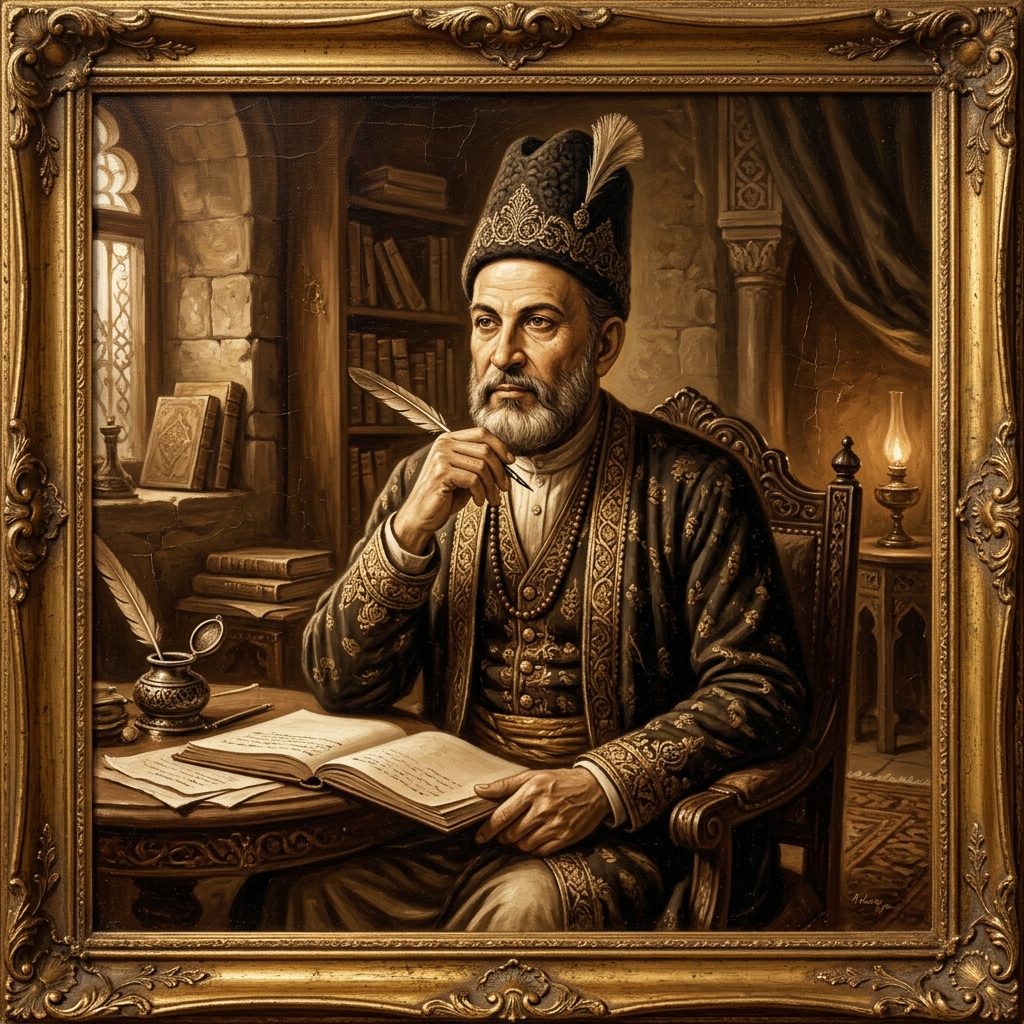
Qamar Jalalvi
Qamar Jalalvi (1887–1968) was a classical Urdu ghazal poet celebrated for the simplicity and clarity of his expression. Born Syed Mohammad Hussain in Jalali, near Aligarh, he began writing poetry at the age of eight and was already popular by his twenties. He earned his living for many years repairing bicycles; the title "Ustad" — first given to him as a skilled workman — stayed with him as critics recognised his mastery of the ghazal, and he became known as Ustad Qamar Jalalvi. He lived in great financial hardship despite his fame. After the Partition of 1947 he moved to Karachi, where he spent the rest of his life. His ghazal collections include Rashk-e-Qamar, Auj-e-Qamar, Tajalliyat-e-Qamar and Gham-e-Javedan. Many of his ghazals were set to music and sung, but his reputation rests on the chaste classical ghazal itself: direct language, a complete thought in two lines, and a maqta that turns on his own name, Qamar — the moon.
Qateel Shifai
Qateel Shifai (1919–2001), born Muhammad Aurangzeb Khan on 24 December 1919 at Haripur in the Hazara Division, was Urdu's great lyrical poet — a ghazal writer whose lines travelled, without losing their literary shape, into the mouths of millions through film. His father's death in 1935 cut short his education; small businesses failed, and in 1946 he was called to Lahore as assistant editor of the monthly Adab-e-Latif. He showed his early verse to Hakim Yahya Shifa Khanpuri, from whom he took "Shifai", and then became the disciple — and neighbour and friend — of Ahmad Nadeem Qasmi. From Teri Yaad (1947) he wrote film lyrics for over five decades, more than two thousand songs, while publishing some twenty collections of ghazals and nazms — Guftagu, Bargad, Amokhta among them — in a diction deliberately simple, musical and close to ordinary speech. He received the Adamjee Literary Award (1964) and the Pride of Performance (1994); his autobiography Ghungroo Toot Gaye appeared posthumously. He died in Lahore on 11 July 2001; Haripur and a Lahore street now carry his name.