
Poets Directory (شعرائے کرام)
Explore profiles, portraits, life biographies, and complete poetry of classical and modern Urdu luminaries.
Ibn-e-Insha
Ibn-e-Insha (1927–1978), born Sher Muhammad Khan in Phillaur, Jalandhar district, Punjab, was one of the most beloved voices of modern Urdu — a poet of distinctive diction laced with the earthy speech of the Hindi-Urdu complex, and one of the finest humorists of Urdu. After Partition he settled in Karachi; he took his B.A. from Punjab University (1946) and M.A. from the University of Karachi (1953), and worked with Radio Pakistan, the Ministry of Culture and the United Nations, whose travels fed his celebrated travelogues — *Chalte Ho To Cheen Ko Chaliye*, *Awara Gard Ki Diary*, *Ibn-e-Battuta Ke Taqabum Mein*, *Duniya Gol Hai*. His poetry collections *Chand Nagar*, *Is Basti Ke Ik Kooche Mein* and *Dil-e-Wehshi*, his children's verse *Bloo Ka Basta*, and his Urdu translation of Chinese poems (*Chini Nazmein*, 1960) followed. He received the Pride of Performance in 1978. He died of Hodgkin's lymphoma in London on 11 January 1978 and was buried in Karachi.
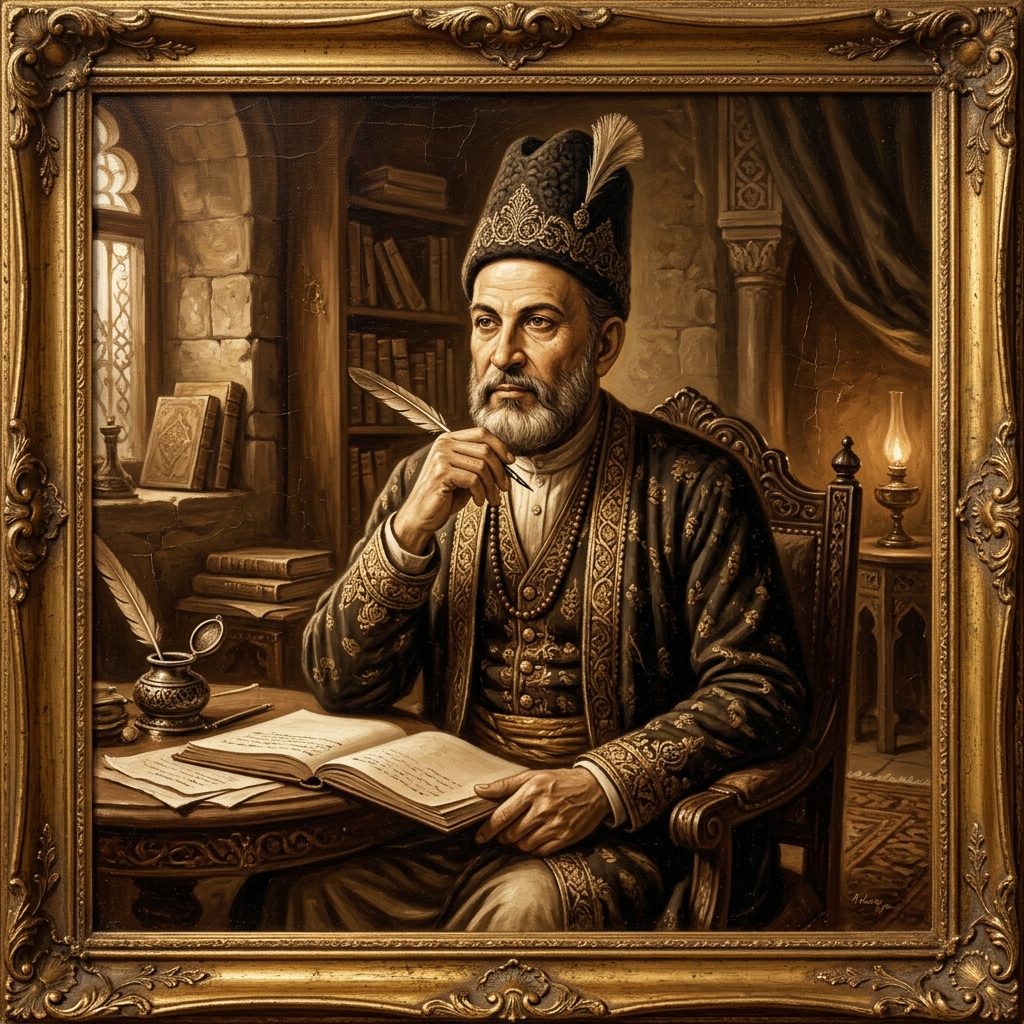
Irfan Siddiqi
Irfan Siddiqi (1939–2004) was a prominent modern Urdu poet of the neo-classical school, born at Badayun, Uttar Pradesh, on 8 January 1939. He took a postgraduate degree in sociology and joined the Central Information Service in 1962, serving in the Press Information Bureau until his retirement in 1997 as Deputy Principal Information Officer — a government career he carried alongside a lifetime of poetry. His collections run from *Canvas* (1978) through *Shab-e-Darmiyan* (1984), *Saat Samawat* (1992), *Ishq-Nama* (1997) and *Hawa-e-Dasht-e-Mariya* (1998), gathered in *Dariya* (1999). Classical in form and contemporary in feeling, his ghazals keep the old architecture — dream, lamp, night, desert — and fill it with a modern inwardness. He died at Lucknow on 15 April 2004.
Ismail Merathi
The pioneer of children's Urdu poetry — the schoolroom verses generations learned by heart. Ismail Merathi (1844–1917), born Muhammad Ismail in Meerut, is the pioneer of children's Urdu poetry. Home-schooled, then trained in Persian under Mirza Rahim Beg (a contemporary of Ghalib), he took a teaching certificate from the Normal School, Meerut, and spent his working life as an educationist — Persian teacher at Saharanpur (1867/68), then at the Central Normal School, Agra (1888), retiring in 1899. His fame rests on poems a child can sing and a sage can quote: *Nasihat*, *Barsaat*, *Humari Gaye*, *Subah Ki Aamad*, *Sach Kaho* — in Pakistan's primary-school curriculum to this day. He translated English poems into Urdu (*Reza-e-Jawaher*, 1885), wrote the geography textbook and the Urdu primers that taught generations to read (*Urdu Zuban Ka Qayeda*, *Urdu Ki Pehli* through *Panchvi Kitab*), and compiled his *Kulliyat-e-Ismail* (1910). A philanthropist, he founded the Madrasa-tul-Banat girls' school in Meerut in 1909 (today the Ismail National Mahila PG College), and the British government honoured him with the title "Khan Sahib" (1912). He died in Meerut on 1 November 1917, aged seventy-three.