Poets Directory (شعرائے کرام)
Explore profiles, portraits, life biographies, and complete poetry of classical and modern Urdu luminaries.
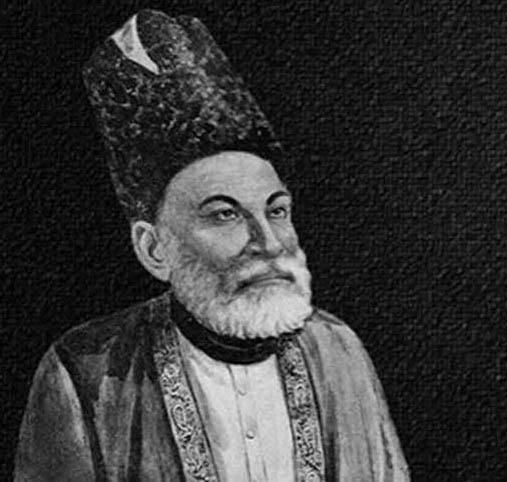
Mirza Ghalib
Mirza Asadullah Khan Ghalib is the most widely celebrated and critically acclaimed poet of the Urdu language. His intellectual depth, witty skepticism, existential philosophical inquiry, and mastery of metaphor transformed Urdu poetry forever.
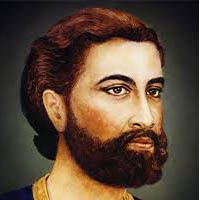
Mir Taqi Mir
Revered as Khuda-e-Sukhan (The God of Poetic Expression), Mir Taqi Mir was the pioneer of the Urdu ghazal whose pathos, melancholic elegance, and sheer linguistic purity set the standard that Ghalib and later poets aspired to emulate.
Mah Laqa Bai
Mah Laqa Bai "Chanda" (7 April 1768 – August 1824), born Chanda Bibi in Aurangabad, was a tawaif-turned-court-poet of Hyderabad — the first woman Urdu poet with a published diwan. Daughter of the courtesan Raj Kunwar (who had migrated from Rajputana) and Bahadur Khan, a Mughal mansabdar, she was raised by her childless aunt Mehtaab Ma, the favoured courtesan of Nawab Rukn-ud-Daula, who gave her an elite education. The second Nizam, Mir Nizam Ali Khan (Asaf Jah II), conferred the title "Mah Laqa Bai" (Visage of the Moon) and appointed her to the *omarah*, the highest nobility; she advised on state policy, accompanied him to three battles in male attire, and was celebrated as a thumri singer and Deccani Kathak dancer — the first woman of the region to recite in a mushaira. Her diwan, *Gulzar-e-Mahlaqa* (39 ghazals of 5 couplets each), was printed in 1824 after her death — the first published diwan by any woman Urdu poet; her own 1798 manuscript *Diwan-e-Chanda* (125 ghazals, gifted to Captain Malcolm in 1799) survives in the British Museum. She died in Hyderabad in 1824 and lies in the mausoleum she built at Moula-Ali, restored in 2010. She is also held, by some scholars, to be the inspiration behind Mirza Hadi Ruswa's *Umrao Jaan Ada* (1899).
Meer Syed Ali Ghamgeen Dehlvi
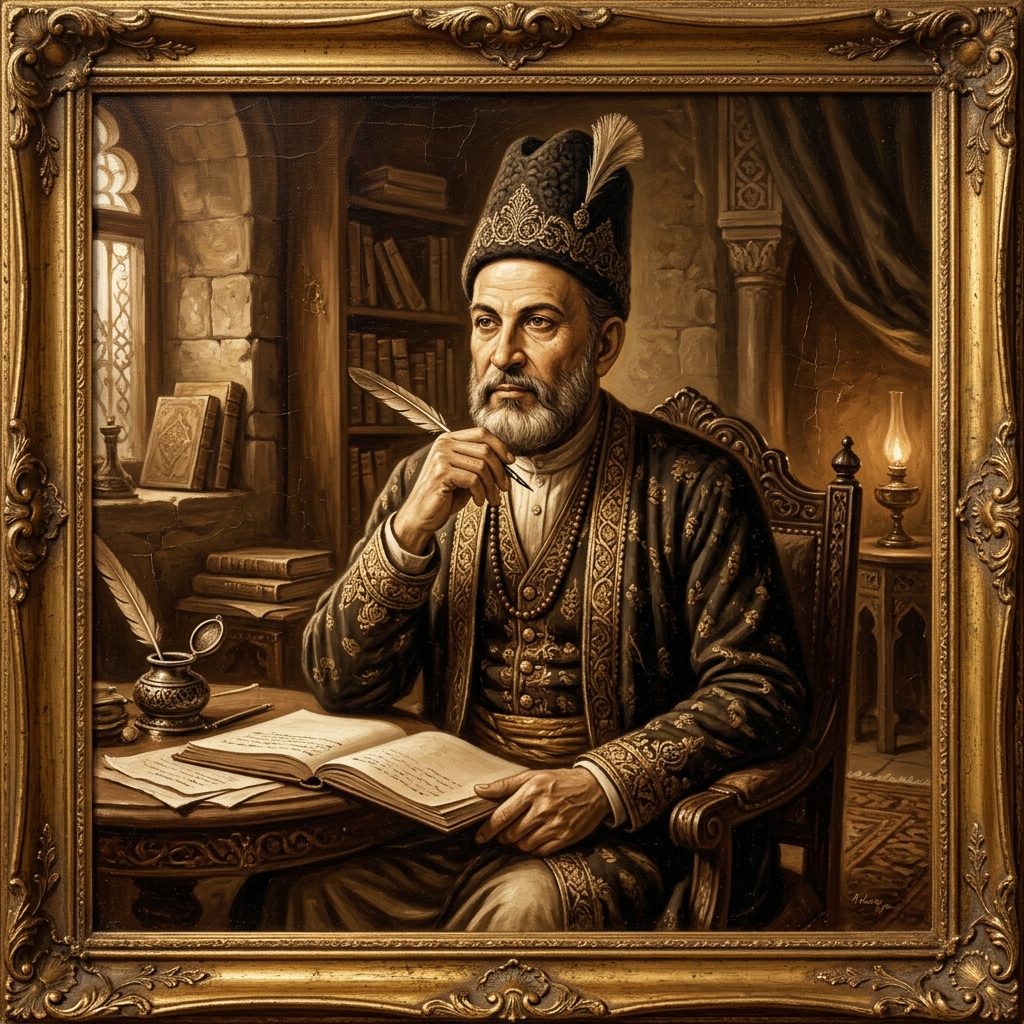
Meer Syed Ali Ghamgeen Dehlvi was a Sufi poet of Delhi for whom Mirza Ghalib held great devotion. His dates must be read with care: 1753–1851 is sometimes given, a span of ninety-eight years, but his birth year is disputed and is recorded here as Unknown, with 1851 carried as the death year. What is solid is the work: 10 ghazals and 9 sher from him survive, with books including Makhzan-ul-Asrar (his diwan of ghazals), Makashafat-ul-Asrar, and a Diwan-e-Rubaiyat, and later studies of his life and poetry, including a volume on the Persian correspondence between Ghalib and Ghamgeen. His verse is Sufi to the core: the journey within the self, wine as spiritual symbol, death, and the beloved's voice heard at the final hour.
Mir Hasan
Mir Hasan (1727–1786), born Mir Ghulam Hasan in Delhi's Syed Wada, was the foremost masnavi poet of Urdu — and the grandfather of Mir Babar Ali Anis, the future king of the marsiya. Trained first by Khwaja Mir Dard, he came of age in a Delhi that was breaking apart: his family moved to Faizabad in Awadh as the invasions pressed, and he later settled at Lucknow, where the displaced Delhi school rebuilt itself under the Nawabs. There he composed, in 1784, the work that made him immortal: Sehr-ul-Bayan, the masnavi romance of Benazir and Badr-e-Munir — a love story told with such sweetness of language that it became the model Urdu narrative poem. Around it stand his other masnavis — Gulzar-e-Iram, the verse-account of the Delhi to Awadh migration; Ramuz-ul-Arifin, a Sufi masnavi; Khwan-e-Nemat, on the dishes of Asaf-ud-Daula's dastarkhwan — plus a ghazal divan and a Persian tazkira of Urdu poets, Tazkira-i-Shuara-i-Urdu. Four of his sons were poets; through Anis, his grandson, his bloodline carried the masnavi's music into the marsiya's age. He died at Lucknow in 1786.
Mir Jafar Zatalli
Mir Muhammad Ja'far Zatalli (birth year disputed — c. 1658/59, Narnaul in the Delhi Subah; died 1713, Delhi) is often called the first satirist of the Urdu language. Born into a Shia Sayyid family of Narnaul (in present-day Haryana), he lived through the reigns of Aurangzeb, Bahadur Shah I and Farrukhsiyar, served princes and amirs — including Prince Kam Bakhsh — and turned his pen into a weapon. His art was hajw: scathing lampoon of the nobles, maulvis, kotwals and officials of a decaying empire, written in rekhta — a crude, living mixture of Urdu and Persian that the refined called nonsense and he made his own (his takhallus Zatalli means exactly that: "the babbler of nonsense"). His verse spares nothing and nobody, and much of it is too profane for the public page — which is why this entry leads with the life, not the lines. The life ended the way the satire demanded: after he parodied Emperor Farrukhsiyar's coronation coin in verse, the emperor had him strangled with a shoelace — tasma-kashi — in Delhi in 1713. His Zatal Nama survives in nineteenth-century lithograph editions, and in him Urdu poetry learns its first, dangerous lesson: that the pen can laugh at a throne.
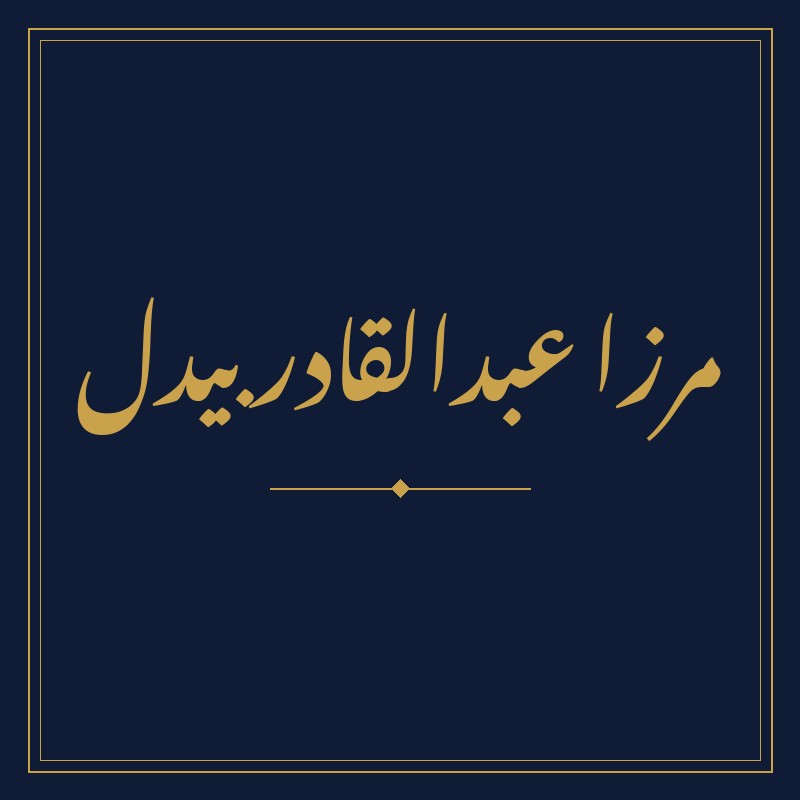
Mirza Abdul-Qadir Bedil
Mirza Abdul-Qadir Bedil (1642–1720), born at Azimabad (present-day Patna) into a Chaghatay Barlas family, was the foremost Persian poet of the Indian style (Sabk-e-Hindi) and a Sufi thinker of the school of wahdat al-wujud — the unity of being. Orphaned young and raised by his uncle, he taught himself Persian, philosophy, medicine, astrology and music, and spent most of his life in Delhi, where his gatherings drew scholars, Sufis and poets. He refused court patronage and panegyric, writing instead for truth as he saw it, on the side of the common people against a corrupt clergy. His sixteen books hold nearly 147,000 verses — ghazals, rubais and four great philosophical masnavis (Muhit-e-Azam, Tilism-e-Hairat, Tur-e-Marifat, Irfan), plus the prose autobiography Chahar Unsur. His verse is famously difficult: dense, paradoxical, riddle-like, building meaning out of startling compounds and metaphors. That difficulty became his gift to Urdu poetry — Ghalib learnt his "meaning-creating" art from Bedil and called him, in effect, Ghalib's Ghalib; Iqbal too read him deeply. He died at Delhi in 1720, where his shrine-garden, Bagh-e-Bedil, still stands.
Mirza Ali Lutf
Mirza Ali Lutf (d. 1813) was an early Urdu prose writer and poet of the age of Fort William College, Calcutta, remembered above all as the author of Gulshan-e-Hind — the first biographical treasury of Urdu poets, written in 1801 at the suggestion of John Gilchrist, the college's head. He rendered Ali Ibrahim Khan's Persian Gulzar-e-Ibrahim into Urdu, giving the new Urdu prose its first literary history, and he also turned Saadi's Pand-Nama into Urdu verse and wrote the masnavi Nairang-e-Ishq. His own poetry, in what survives, is small — ten ghazals and fifteen couplets — and it is the plain-spoken ghazal of a traveller: the rind answering the preacher, the road from the temple winding to the Kaaba, and a wanderer who left Hindustan not knowing whether the dark men of the Deccan or the fair men of England would be his end. No birth year is settled for him, and no birthplace is recorded; his working life ran between Hyderabad, where Gulshan-e-Hind was written, and Calcutta.
Mirza Jan Tapish
Mirza Jan Tapish — real name Mirza Mohammad Ismail — was a Delhi-born poet and lexicographer whose life ran through the hinge of British India. His father, Mirza Yusuf Begh, had come from Bukhara and settled in Delhi, where Tapish was born and where he learnt Persian, Urdu and Sanskrit. In 1799 he was imprisoned with Shamsuddowlah for an alleged conspiracy to unsettle the British and sent to jail in Calcutta; freed in 1806 or 1807, he joined Fort William College as a scribe of Persian documents and a reviser of other translators' books, and became one of Calcutta's men of letters. His first book, Shamsul Bayan fi Mustalahat-e-Hindostan (1792), is a Persian dictionary of Urdu idioms, proverbs and technical terms, named for his friend Shamsuddowlah; he translated Enayetullah's Persian Masnavi Bahar-i-Danish into Urdu in 1801; and his own Urdu poems, the Kulliyat-i-Tapish, were published by Fort William College in 1812. The tazkiras praise his neatness, his clarity of language (fasahat) and the freshness of his subjects. He died in Kolkata in 1814.
Mirza Muhammad Hasan Qateel
Mirza Muhammad Hasan Qateel (c. 1758–1818) was born Diwani Singh, into a Punjabi Khatri family of Delhi, and became the most influential Persian teacher of his age in India. Educated in Persian and Urdu, he came at eighteen under the influence of his tutor, the Shi'a poet Mirza Baqir Shahid Isfahani, embraced Twelver Shi'a Islam, and took the name Mirza Muhammad Hasan Qateel. After service in the army of Najaf Khan, he moved to Lucknow in 1784, where he became the city's leading philologist and teacher of Persian. A polyglot — Persian, Urdu, Turkish and Arabic — he wrote nearly twenty books, above all the Persian grammars Chahar Sharbat and Nahr al-Fasahat, which were copied across India as primers and drew a famous line between Indian Persian and the Iranian Persian he held as standard. With Insha Allah Khan Insha he wrote Darya-e-Latafat, the first book on Urdu metre and prosody. His Urdu ghazals, in the manner of Hafiz, survive only scattered in tazkiras. He died in Lucknow in 1817 or 1818 and is buried at Qaisar Bagh.