
Poets Directory (شعرائے کرام)
Explore profiles, portraits, life biographies, and complete poetry of classical and modern Urdu luminaries.
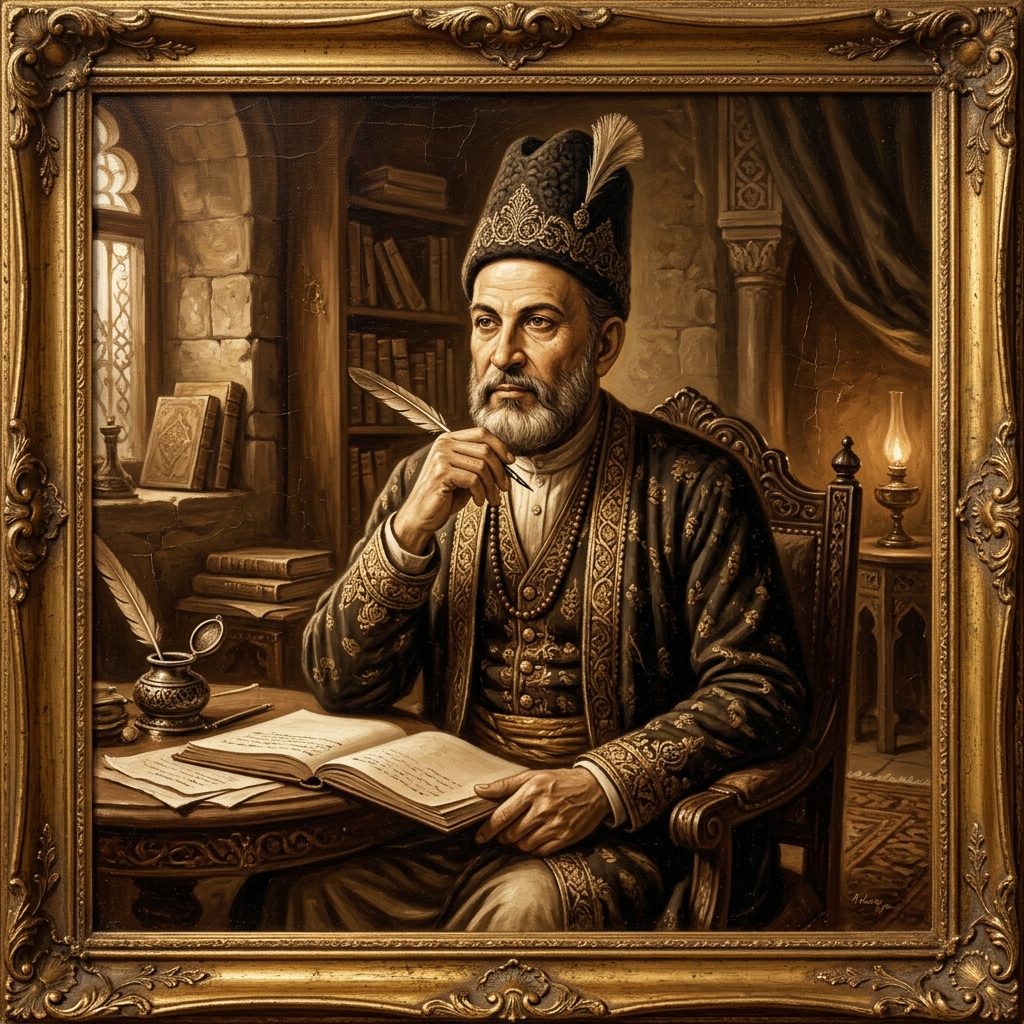
Jafar Ali Hasrat
Mirza Jafar Ali Hasrat was an eighteenth-century Lucknow poet and a prominent contemporary of Mir Taqi Mir, known for his depiction of physicality in romantic poetry. He belonged to the early Lucknow school, at a moment when Urdu ghazal was finding a voice distinct from Delhi's, and his influence is visible in his most famous disciple, Qalandar Bakhsh Jurat, who carried the same frank, bodily idiom further. Hasrat's own surviving work is small — one ghazal and two celebrated couplets, with a *Kulliyat-e-Hasrat* published in 1966 — but its note is unmistakable: a lover who accepts the beloved's cruelty as the beloved's pleasure, and who would rather be kept in the cage than freed without wings. That combination of devotion and defiance, tenderness and bodily directness, marks him as a Lucknow voice in his own right, not merely as Mir's contemporary.
Joshish Azimabadi
Joshish Azimabadi (1737–1801) was a classical Urdu poet of Azimabad — the 18th-century name for Patna in Bihar — and a prominent contemporary of Mir Taqi Mir. He wrote "at far-off Azimabad in Delhi style," proof that the Delhi ghazal had travelled well beyond the capital by the mid-1700s and found a serious practitioner in the east. Little else about his life is preserved: no given name, teacher or court attachment is reliably recorded, and his work survives principally through his diwan, Deewan-e-Joshish, in a 1976 Bihar Urdu Academy edition. What the couplets show is a poet equally at home in love's dishevelled complaint and in Sufi argument. He turns the beloved's tress into a mirror of his own distraught state, blesses a cruel beloved with ironic courtesy, and, in his most philosophical verses, dissolves the quarrel of temple and sanctuary into one truth: the Kaaba and the idol-house are one, and the only road worth taking leads to the house of the heart.