
Poets Directory (شعرائے کرام)
Explore profiles, portraits, life biographies, and complete poetry of classical and modern Urdu luminaries.
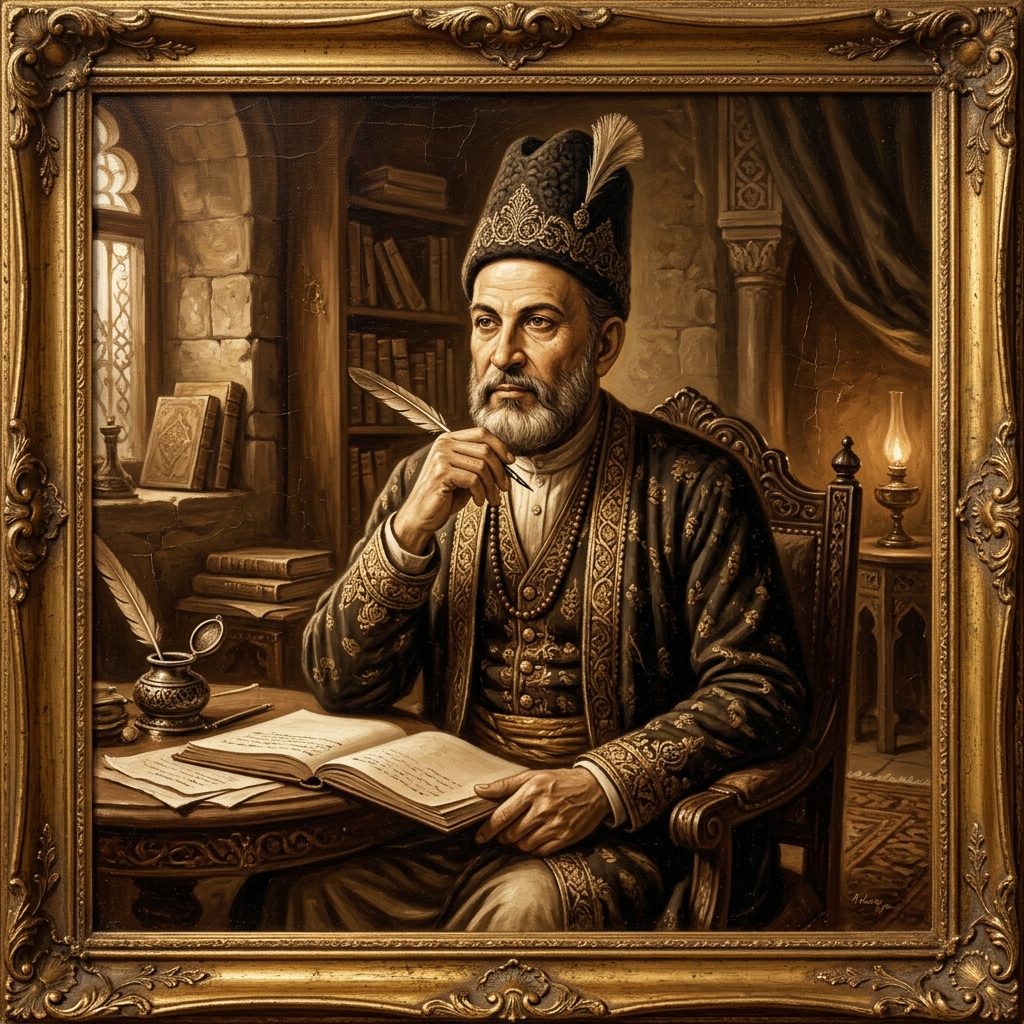
Faqir Muhammad Khan Goya
Faqir Muhammad Khan Goya (c. 1784 – c. 1850) was the soldier-poet Nawab of Malihabad, in Awadh. Born into an Afridi Pashtun family whose roots lay in the Khyber region, he mastered Urdu and Persian and followed the school of Imam Bakhsh Nasikh. He served as a soldier and commander under Yashwant Rao Holkar at Indore and under Ghaziuddin Haider, Nawab of Awadh, rising to Commander-in-Chief of the Awadh army, and founded the Tharri-Fatehnagar estate at Malihabad. His Diwan-e-Goya holds ghazals, qasidas, naats, nohas and salaams, and his Bustan-e-Hikmat (Nawal Kishore, 1887) renders the Persian Anwar-e-Suhaili into Urdu. He is remembered in Malihabad's literary line as the great-grandfather of Josh Malihabadi — the elder voice of the town whose poetry Josh would later carry to the world.
Fidvi Lahori
Fidvi Lahori (1729–1780) was born Mukund Lal into a Hindu Bania family of Lahore. He converted to Islam and took the name Mirza Fidai Beg, with "Fidvi" — one who sacrifices himself, a devotee — as his takhallus. After several years in Isfahan, he came to Delhi and became a pupil of Sabir Ali Sabir. A qasida he wrote for Ahmad Shah won him a horse, a sword and a thousand rupees. He served at the courts of Nawab Muhammad Yar Khan and later Nawab Zabita Khan. His poetic rivalry with Mirza Sauda was famous: Sauda lampooned him in satires, one of them in Punjabi, that survive in Sauda's kulliyat. Little of Fidvi's own Diwan has survived, but one of his couplets — on the lover's funeral going out with pomp — has passed into proverb. He died in 1780, in Lahore according to most accounts, though Mashafi says Moradabad.