
Poets Directory (شعرائے کرام)
Explore profiles, portraits, life biographies, and complete poetry of classical and modern Urdu luminaries.
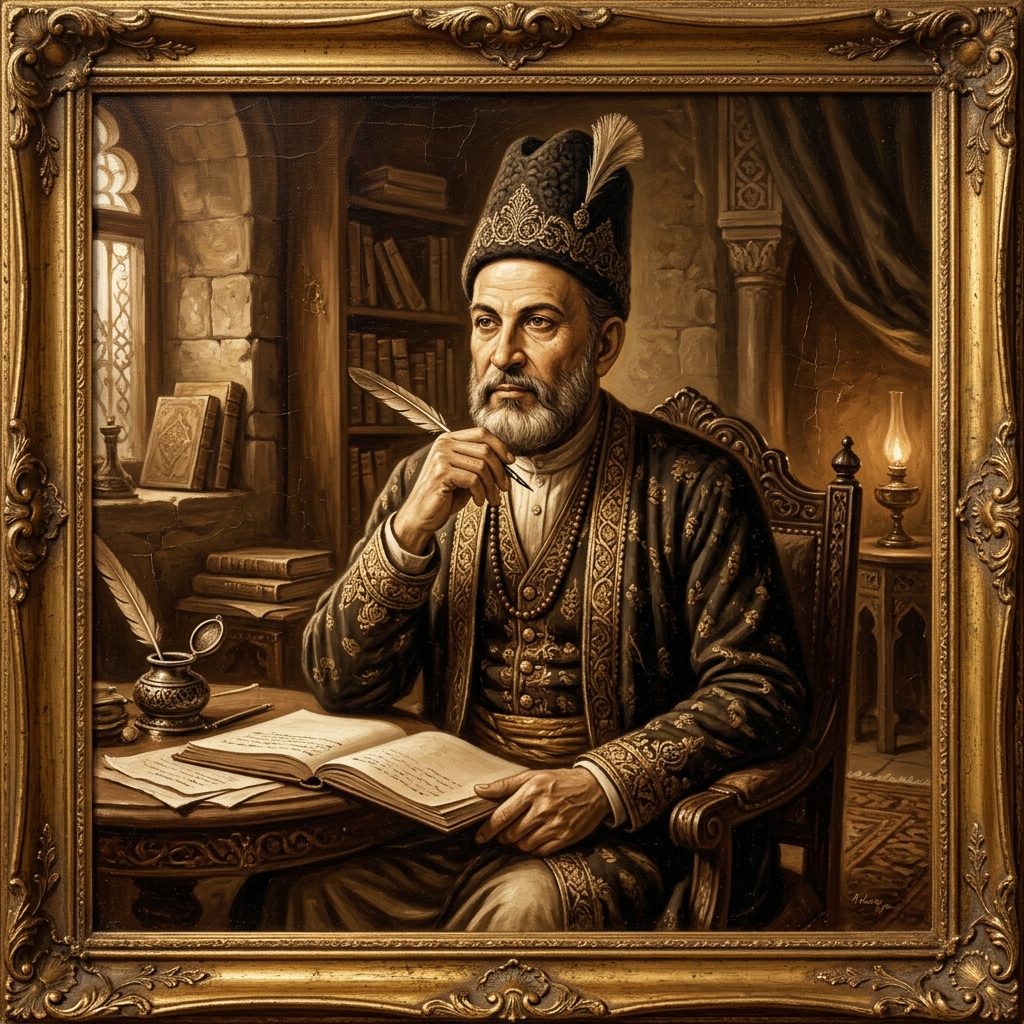
Aagha Akbarabadi
Aagha Akbarabadi (d. 1879) was a classical Urdu poet of Agra — Akbarabad, the old Mughal city whose name he carried as his own. His real name was Meerza Aagha Husain, and no birth year is recorded for him anywhere; he lived in the early-to-mid 1800s, a contemporary of Dagh Dehlvi, while the Mughal Empire was falling apart around him. He never chased courts or patrons: his ghazals speak in the plain language of Agra's streets, and their hero is the rind — the free drinker whose prayer-mat is spread at the tavern door, who answers preachers with wit and takes the beloved's glance as both wound and worship. Twenty-four of his ghazals and thirty-two of his sher survive — the work of a poet famous in his own city and collected only long after his death.
Aasi Ghazipuri
Aasi Ghazipuri (1834–1917) was a Sufi mystic poet of Ghazipur, of the Nasikh school — he is regarded as "the most respectable after Meer Dard to have written this kind of poetry." Born Shah Muhammad Abdul Aleem on 21 December 1834 at Sikandarpur in Ballia district, into a well-educated family tracing its lineage to Hazrat Umar Farooq, he took the pen-name Aasi and spent his entire life in Ghazipur, publishing his divan under the title Ain-ul-Maarif. He sought counsel in poetry from Afzal Allahabadi, a disciple of Nasikh, and became the teacher of Fani Ghazipuri; Firaq Gorakhpuri and Majnun Gorakhpuri praised him. His ghazal is essentially mystical: the heart's wealth is won only by losing it, love asks to be parted from both worlds, and the believer asks God for nothing but to go on wanting Him. He died at Ghazipur in 1917 and was buried in Mohalla Nooruddinpura. Eighteen of his ghazals and eighteen of his sher survive.
Aish Dehlvi
Aish Dehlvi (1779–1874) was a classical Urdu poet of Delhi, remembered above all as one of the most outspoken critics of Ghalib's poetic style. A physician by profession — he is cited in the Ghalib tradition as Hakeem Agha Jaan Aish — he lived his long life in the Delhi of the late Mughal and early colonial eras, writing in the Delhi idiom at a time when the ghazal's language and obscurity were themselves matters of public debate. He is "one of the most vocal critics of Ghalib's poetic style," and the anecdote that preserves his name is a mushaira exchange in which he teased Ghalib for verse that only its author could understand. His surviving work is small — sixteen ghazals, six selected couplets and one qita, with a modern Kulliyat-e-Aish (1992) as his book — but the couplets that survive show a poet of wit, plain speech and moral clarity: the heart's unnamed ache, the candle burning out at dawn, and a world whose colours and fragrances no longer tempt those who have seen its impermanence.
Allama Fazl-e-Haq Khairabadi
Allama Fazl-e-Haq Khairabadi (birth year disputed, 1796 or 1797 – 19 August 1861) of Khairabad, Sitapur, was one of the great scholar-poets of nineteenth-century India — a Hanafi mufti, a Kalam theologian, and a master of logic and philosophy whom scholars called the final authority on fatwas. Son of Fazl-e-Imam Khairabadi, the Mughals' Sadr al-Sadur, he completed his education by the age of thirteen, taught from that age, studied Hadith with Shah Abd al-Qadir and Shah Abd al-Aziz, and became mufti in the Department of Qaza in 1828. He edited the first diwan of Ghalib at Ghalib's own request, and moved in the Delhi circle of Ghalib, Mufti Sadruddin Azurda and Bahadur Shah Zafar. In 1825 he issued his famous refutation of Ismail Dehlvi, Tahqeeq al-Fatwa fi Abtal al-Taghwa. On 26 June 1857, as Bakht Khan's army reached Delhi, he gave the Friday sermon and issued the edict supporting jihad against British rule — the fatwa signed by Azurda and other Delhi scholars that carried the uprising. After the rebellion failed he was arrested at Khairabad on 30 January 1859, defended himself at his own trial, was sentenced to life transportation, and was shipped to the Andaman Islands on 8 October 1859 aboard the Fire Queen. There, in captivity, he wrote Arabic qasidas as eyewitness accounts of 1857 and his book al-Thawra al-Hindiyya — the first book ever written on the events of 1857. He died in exile on the Andaman Islands on 19 August 1861. His son Abdul Haq, his grandson Muztar Khairabadi and his great-grandson Jan Nisar Akhtar carried the family's literary line forward.
Amanat Lakhnavi
Agha Hasan Amanat — Amanat Lakhnavi (birth year disputed; died 1858) — is the man who put Urdu poetry on a stage. Attached to the court of Wajid Ali Shah, the last Nawab of Awadh, he wrote in 1853 Indar Sabha, the first complete Urdu stage play — a musical opera in verse, some 830 couplets and 72 songs, telling the love story of Sabz Pari and Gulfam in a blend of ghazal, thumri, holi and savan songs, chhand and chaubola. Staged at the Nawab's court, it became the seed of Urdu musical theatre — the ancestor of the Parsi stage and, through it, of the film song. Sayyid Mohammad Abdullah credited Amanat with beginning the geet tradition in Urdu. Beyond the play he was a Lucknow-school poet of the old mold: hundreds of ghazals and marsiyas in Urdu and Persian, in the flowery, artificial diction his age loved. He lost his speech at twenty and only partly recovered it — a poet who knew what silence was, and filled it with music. He died in 1858, the year the world his play had been written for came to an end.
Ameer Khusro
Ameer Khusro (1253–1325), born Abul Hasan Yaminuddin Khusro in Patiyali (Etah, U.P.), is the first poet of Rekhta/Hindavi — the founding voice of Urdu — and an icon of the Delhi Sultanate. The son of a Turkic Central-Asian father and an Indian mother, he became a devoted disciple of the Sufi saint Nizamuddin Auliya and served as court poet under the sultans of Delhi. His primary works are in Persian — the Khamsa, the masnavis Hasht Bihisht and Nuh Sipihir, and the prose chronicle Khazain-ul-Futuh — but it is his Hindavi verse that made him immortal: the playful pahelis (riddles) woven into Indian folklore, and the qawwali kalams still sung seven centuries on. His ghazal "Ze-hal-e-miskin" — Persian and Hindavi alternating line by line — is regarded as the first ghazal ever written in Rekhta. Honoured as Tuti-e-Hind (Parrot of India) and called the father of qawwali, he fused Persian and Indian music, created the khayal and tarana forms, and is traditionally credited with the invention of the tabla and sitar. He died in Delhi in October 1325, months after his master, and lies buried beside Nizamuddin's grave.
Ashraf Ali Khan Fughan
Ashraf Ali Khan Fughan (died 1772) was a prominent 18th-century poet of Delhi and a contemporary of Mir Taqi Mir. His birth year is not settled — 1725/6 is one given year, while other accounts place him vaguely in the early 1700s — so his birth year is recorded here as Unknown rather than choosing between them. His Diwan-e-Fughan survives in modern editions, and 15 of his ghazals survive. He is praised for fresh imagery, elegant diction, and a playful satire and wit that set him beside Mir and Sauda among the Delhi masters. One fuller life story — foster brother of Emperor Ahmad Shah Bahadur, pupil of Ali Quli Nadeem, bearer of the title Zarif-ul-Mulk, later in Murshidabad, Awadh and Azimabad (Patna) — is also told of him, though it remains uncertain; the title itself is also known as a name variant.
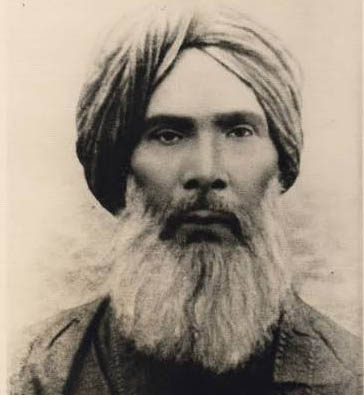
Amir Minai
The poet whose heart carried the whole world's pain — lexicographer of the *Ameer-ul-Lughat*, master of the naat.